Pils and Rotbier
Beer Styles
What is a North German Pils? It's a pale, bottom-fermented beer with a clean bitterness that serves as the everyday style in Schleswig-Holstein. The name traces back to Pilsen in Bohemia, where the first batch of a pale lager was brewed in 1842. In Germany, "Pils" is a generic term, not a protected designation of origin.
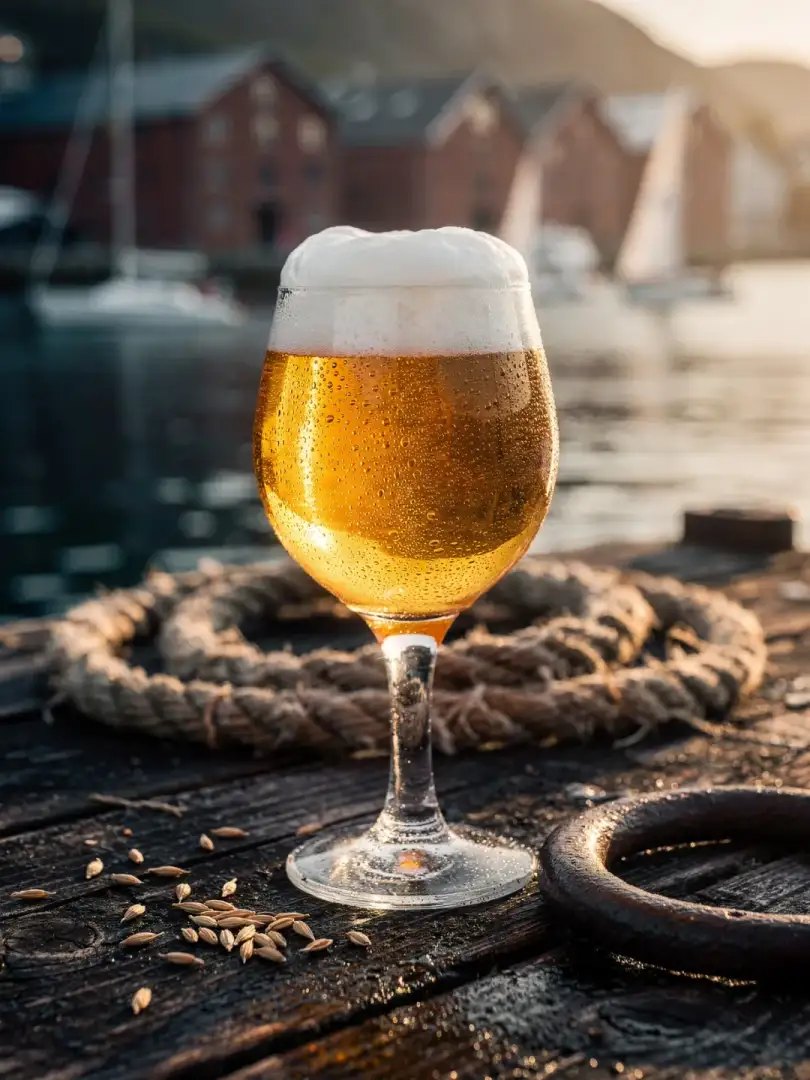
In the north, Pils is considered drier and more bitter than Bavarian Helles. Flensburger Pilsener and Dithmarscher Pilsener are regional examples. Both are golden yellow, clear, and crowned with a firm white head. The alcohol content of a Pils typically ranges between 4.4 and 5.2 percent ABV; original gravity and bitterness are shown in the profile below.
The most important neighboring style is Helles. It's maltier and less bitter—an everyday beer in Bavaria, but the exception in the north. Tasting the two side by side, the difference shows up in the bitterness of the finish. Helles finishes soft and slightly sweet, while Pils finishes dry and bitter. A darker beer like Schwarzbier, by contrast, doesn't belong to the coast—it belongs to Thuringia and Saxony.
The historic Lübeck Rotbier has not survived as a defined style, and there is no standard for it, so no figures are given here. What remains is this: it was reddish, robust, and made for export.
So only Pils can really be described as the leading style here. Its figures come from the general style standard, not from any single brand. Individual beers often vary somewhat in original gravity, alcohol, and bitterness—the values on the label are what count.
Pilsbottom-fermented
- Original gravity
- 11–12.4 °P
- Alcohol
- 4.4–5.2 % vol
- Bitterness
- 22–40 IBU
- Colour
- 4–8 EBC
Pale, clear, firm white head, dry bitterness in the finish.