Cold-Fermented, Lagered
Yeast & Fermentation
Black Forest Pils is bottom-fermented. The yeast works at cool temperatures, settling at the bottom of the tank after fermentation and giving the beer a clean, crisp character. In Donaueschingen, Fürstenberg uses its own pure-culture yeast strains—strains the brewery propagates from a single cell and maintains in-house.
Pure-culture yeast is a 19th-century invention. The Dane Emil Christian Hansen isolated the first pure culture of a bottom-fermenting yeast in 1883 at the Carlsberg laboratory in Copenhagen. Before that, every fermentation ran on a mix of wild yeasts and bacteria, and more than a few batches turned sour.
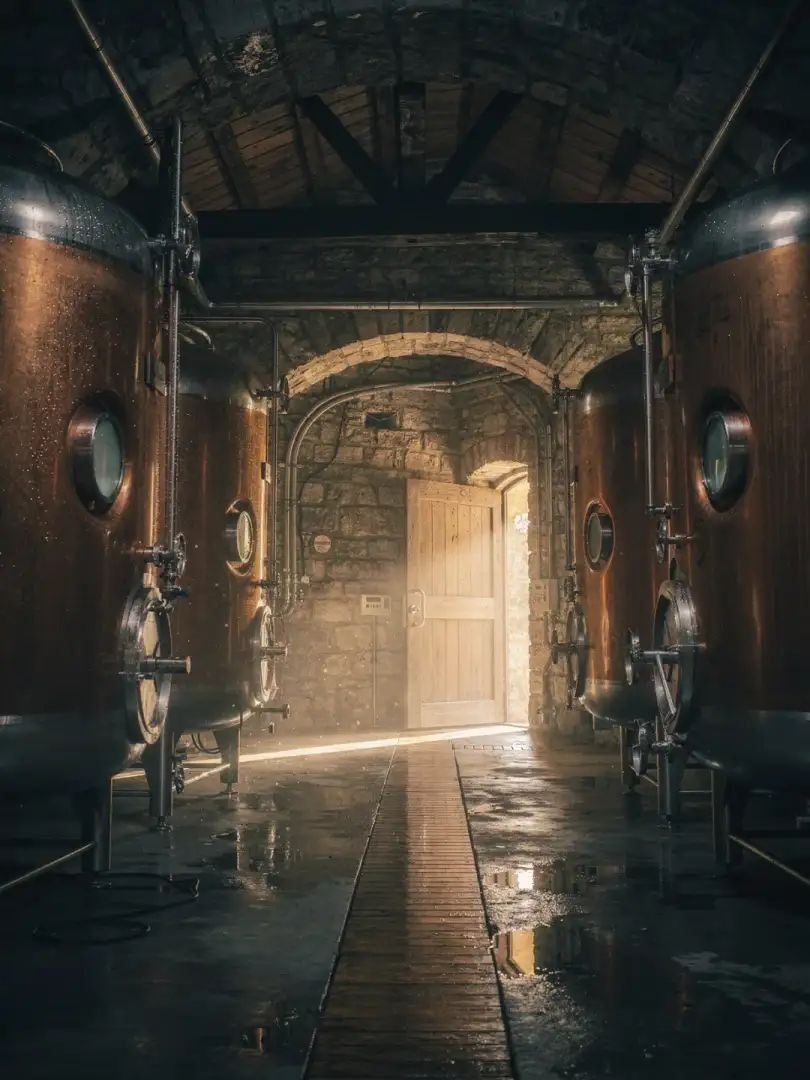
After primary fermentation comes lagering. During this stage, the beer matures at temperatures near freezing, the yeast settles further, and unwanted flavors like buttery notes fade away. The word "lager" comes directly from this process—it means the storing of beer before it's served. How many weeks any individual brewery allows for this isn't stated in the sources.
The high altitude makes things easier. In the High Black Forest, Rothaus sits at around 1,000 meters, where winters are long and cold. Cold air helps chill the cellars—though machines handle that now. In Alpirsbach, Weilheim, and Donaueschingen, lagering follows the same pattern typical of bottom-fermented brewing.
You notice a difference from top-fermented beer in the nose. A Pils smells of hops and fresh grain, with barely any fruit character. A top-fermenting yeast, working at warmer temperatures, would produce esters reminiscent of banana or pear—flavors that have no place here.