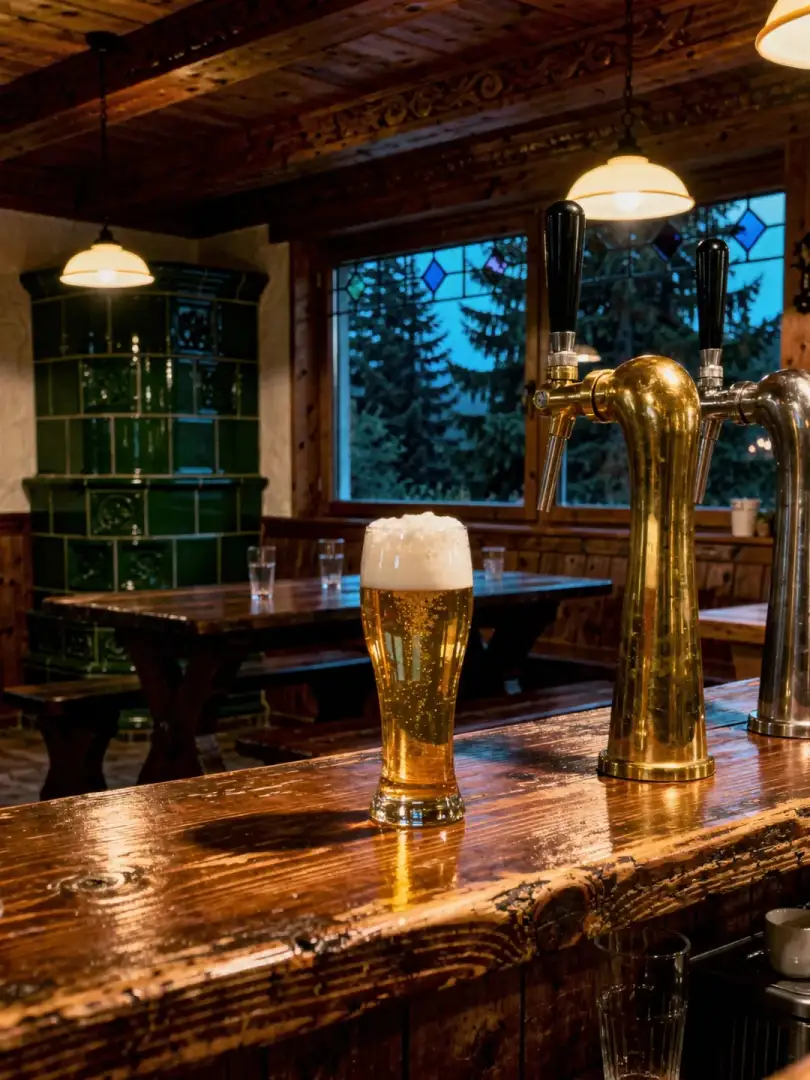
Tulip Glass, Bottle, Tap
Tasting
A freshly poured Pils from the Black Forest tastes first of grain with a subtle herbal note, followed by a bitterness that doesn't linger long. Rothaus Tannenzäpfle is a fine example of this, while Fürstenberg Pils and Waldhaus's Diplom Pils each show their own distinct character.
Waldhaus's Diplom Pils has reportedly won 21 consecutive DLG gold medals, according to the brewery. The DLG, or German Agricultural Society, evaluates beers for aroma, flavor, and purity. A medal speaks to technical cleanliness—not necessarily to whether you'll personally enjoy it.
Alpirsbacher Klosterbräu is another fine example. You can tour the brewery in Alpirsbach and sample its beers right on-site, next to the old monastery in the heart of town. Compare a few, and you'll notice: even with soft water as a common starting point, differences remain—in hop character, body, and finish. Try two beers back to back, and you'll taste it most clearly.
The classic glass for Pils is the Pils tulip—slender, with a slightly flared rim. It holds the head of foam and shows off the pale gold color. Serving temperature is around 6 to 8 degrees Celsius (43–46°F). Too cold, and the hops vanish; too warm, and the beer falls flat.
When it comes to pouring from the tap, the foam is what matters most. It should be firm and fine-bubbled, shielding the beer from air. That's why it's poured in stages, giving the foam time to settle before topping up. From the bottle, pour at an angle first, then straighten the glass toward the end.