Lager and Wheat Beer
Yeast & Fermentation
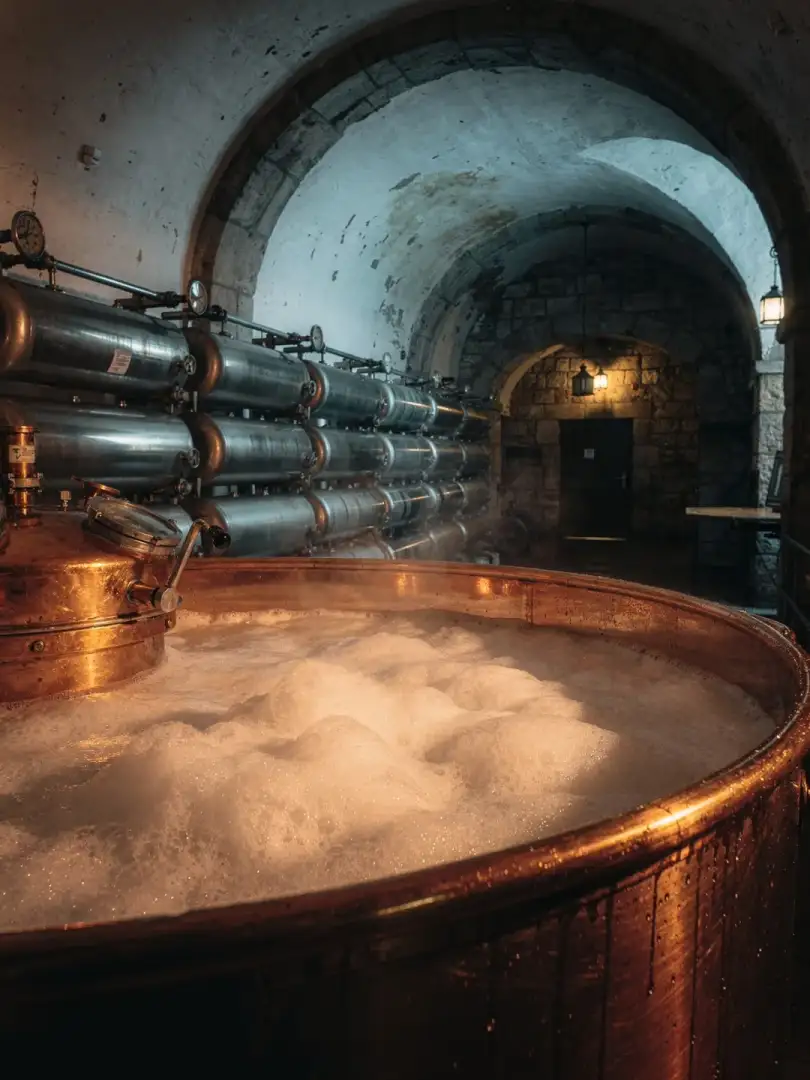
Yeast turns the sugar in wort into alcohol and carbon dioxide. Until the 19th century, nobody knew exactly what was happening, yet brewing always relied on yeast regardless. It wasn't until 1883 that Emil Christian Hansen in Copenhagen succeeded in isolating a pure culture of bottom-fermenting yeast, and ever since, a single strain can be used deliberately.
Most of Stadtbrauerei Spalt's beers — Helles, Pils, and Dunkel — are bottom-fermented. That means the yeast works at cool temperatures and sinks to the bottom at the end of fermentation. The result tastes clean and quiet, without fruity side notes, leaving the stage to the hops.
Weissbier is different. It's top-fermented, with the yeast floating on top and working at warmer temperatures. This produces aromas reminiscent of banana and clove, which is why a Weissbier tastes so different from a Pils, even though both are made from malt, hops, and water.
After primary fermentation, a lager matures for several weeks at just a few degrees above freezing. Lagering means: the beer clarifies, sulfur notes blow off, and it becomes rounder. Exactly which temperatures and timeframes the Spalt brewery uses aren't published; every brewery has its own recipe for this.
Warmth speeds up yeast, cold slows it down. That's why a lager takes significantly longer than a Weissbier, and why lagering used to depend on cool cellars. Only refrigeration technology made it possible in summer. Today, chilled tanks do what rock cellars and natural ice once did, and the taste stays remarkably clean.