Cool Storage, Fermentation
Yeast & Fermentation
In Straubing, two kinds of beer ferment by two different rules. Festbier and Helles are bottom-fermented: the yeast works cool, roughly at 8 to 12 degrees Celsius, and sinks to the bottom at the end. Weißbier is top-fermented, ferments at noticeably warmer temperatures, and thereby develops its notes of banana and clove.
The lager yeast used in bottom fermentation today is a hybrid of two yeast species. It goes by the name Saccharomyces pastorianus. It wasn't isolated in pure culture until 1883, by Emil Christian Hansen in Copenhagen. In Bavarian cellars, however, its ancestors had already been in use long before that, since people brewed in the cold winter and let the beer rest in cool vaults.
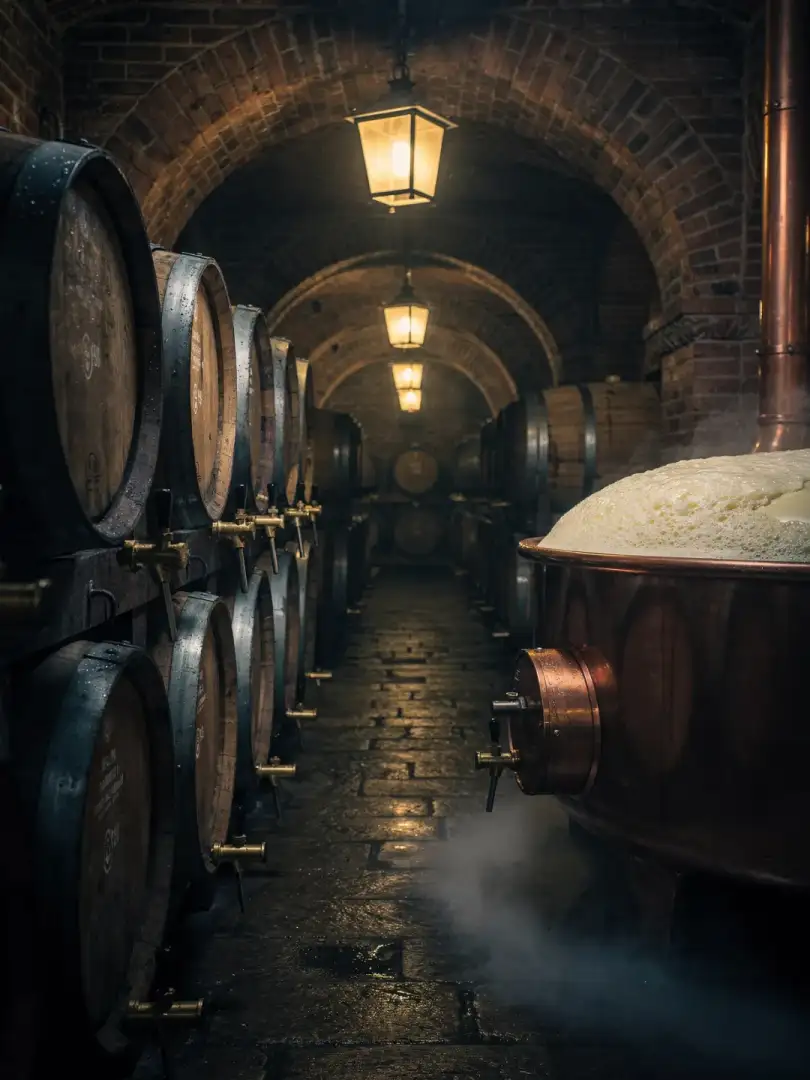
That's exactly what the cellars are for. Decades ago, beer was stored in Brauerei Röhrl's Sommerkeller so it could mature and clarify after primary fermentation. Secondary fermentation in the cold takes weeks, not days. During this time the yeast settles out, the beer grows smoother, and the green-apple notes disappear.
With Weißbier it works differently. The yeast stays in the beer, which is why it's cloudy. It's often bottled with a bit of added yeast that keeps working inside the bottle — what experts call bottle conditioning.
The breweries describe their methods as traditional. Exactly how long a particular Festbier is lagered depends on the style and the year, and we deliberately won't cite a fixed timeframe here. What's certain is the rule of thumb: rush a Festbier or Helles and you get a young, yeasty beer; let it rest and you get something round and clear. Patience is an ingredient that no law requires for lager beer, but every brewer knows it anyway.