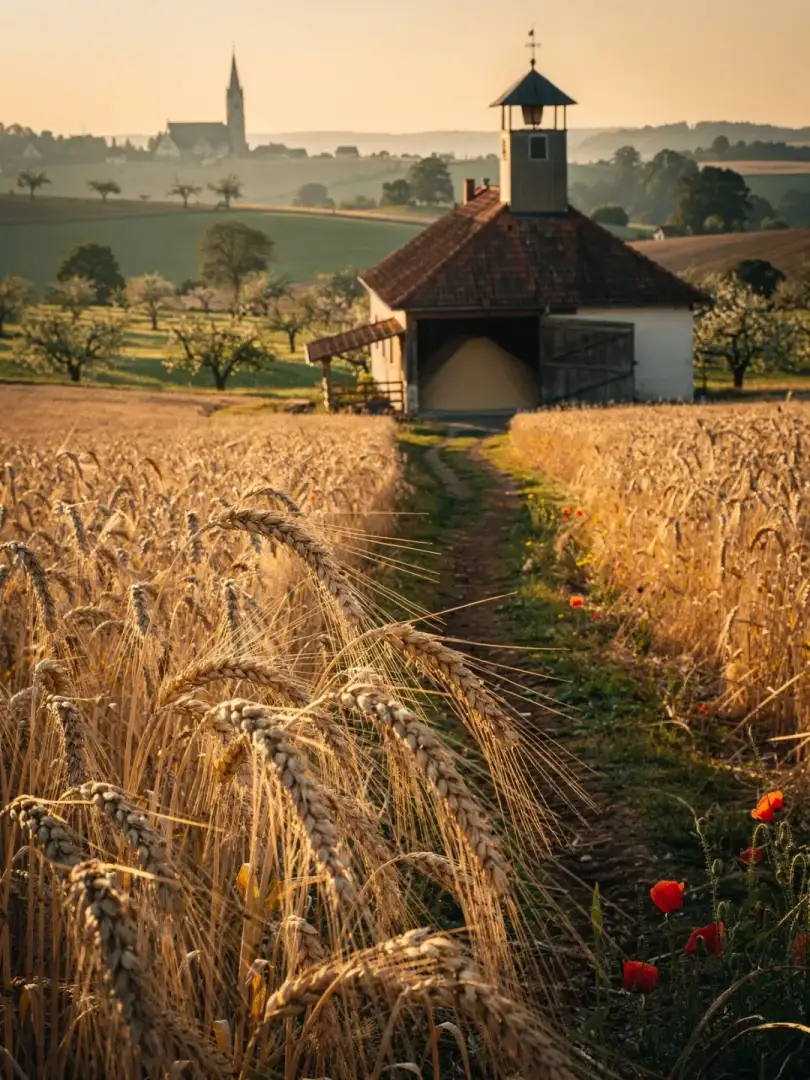
Pale Malt, Full Body
Malt & Grain
What malt goes into Stuttgart Pilsner? Pale barley malt, the backbone of nearly every Pilsner. Barley is the brewer's grain of choice because its husk acts as a natural filter during lautering, the process of separating the wort from the spent grain.
Barley becomes malt by soaking it in water and letting it germinate. During this process it develops enzymes that later break down starch into sugar. The sprouting grain is then halted in the kiln, a kind of drying oven. A short, gentle kilning keeps the malt pale.
Lightly kilned malt gives Pilsner its straw-yellow color, its faint bready character, and the low sweetness expected of the style. Dinkelacker states that its CD-Pils uses hand-selected malts, though the brewery rarely reveals more. The exact varieties, blending ratios, and kilning times remain trade secrets that set one house apart from another.
Festbier calls for a bit more. It's brewed with a higher original gravity—the proportion of dissolved compounds in the wort before fermentation—which determines how much alcohol the finished beer can reach. More malt means more body and a touch of honeyed sweetness.
Which maltsters supply the local breweries is not documented here. What is clear is that wheat, rye, or smoked malt play no leading role in Stuttgart's flagship beers. Wheat beer is the exception, offered separately by both breweries.