Mineral Springs in the Kessel
Water & Soil
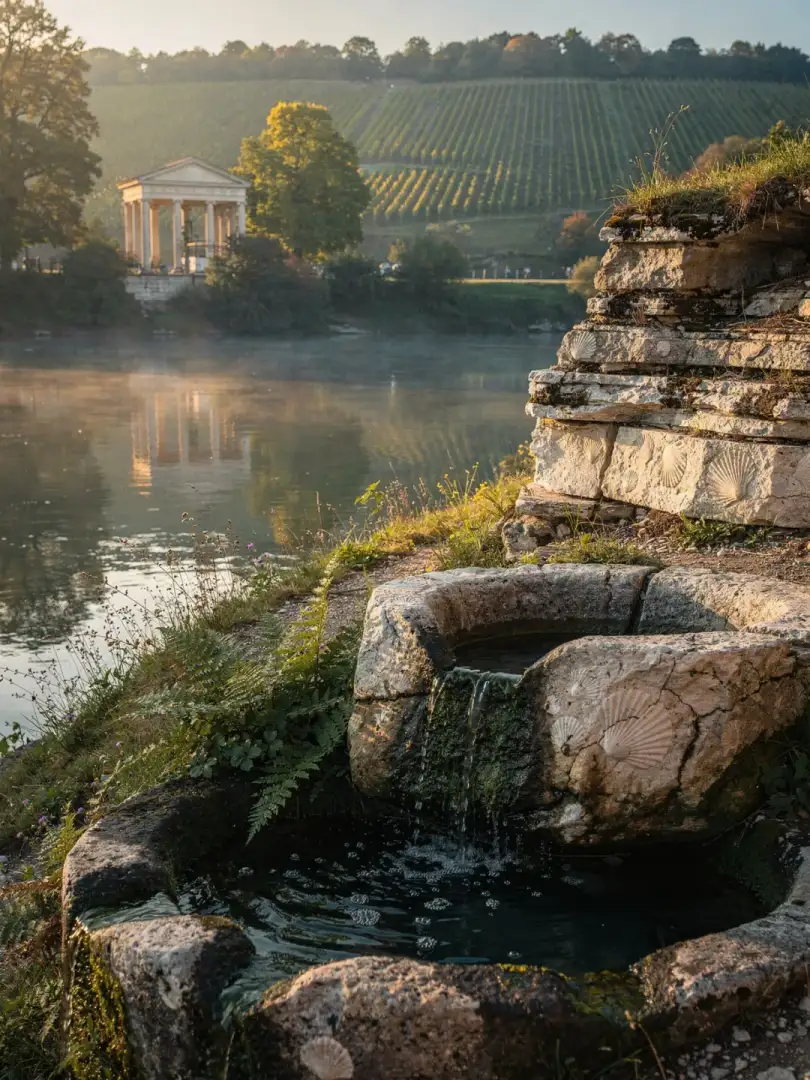
How hard is the water used for Stuttgart beer, and where does it come from? Beneath the city lies Upper Muschelkalk rock, from which mineral water rises. According to Stuttgart's mineral water records, the deposit ranks among the largest in Europe after Budapest's: 19 wells pump roughly 44 million liters a day.
Water is called hard when it carries a lot of dissolved calcium and magnesium—in other words, lime. Muschelkalk is exactly that: an ancient seabed from the Triassic period that turned to stone over time. Brewing water in southern Stuttgart once came from deep wells and springs on the Hasenberg.
Today, the breweries actually share less when it comes to water than one might assume. According to press reports, Stuttgarter Hofbräu operates its own well, drilled 56 meters deep. Dinkelacker, per the same reports, sources water from Lake Constance. Both are newspaper claims, not figures verified by the breweries themselves.
What matters for the beer is what ends up in the kettle. Lime-rich water tends to sharpen the hop bitterness, which is why brewers often treat it for pale beers. Soft water, by contrast, lets a Pilsner taste rounder. How much each brewery adjusts its water remains undisclosed. Anyone curious about their tap water's hardness is better off asking the local water utility than the brewery.
Stuttgart sits in a valley basin ringed by vineyards. The climate inside the Kessel is mild, often muggy in summer. For that reason, the beer is aged cold in tanks and cellars rather than on a hillside, as is done in Franconia.