Fermenting Cold, Fermenting Clean
Yeast & Fermentation
Yeast is what turns sweet wort into beer: it consumes the malt sugar and converts it into alcohol and carbon dioxide. The region's Helles, Pils, and Festbier are all bottom-fermented, like most beers in Bavaria and Franconia. That means the yeast works at low temperatures and settles to the bottom once fermentation is done.
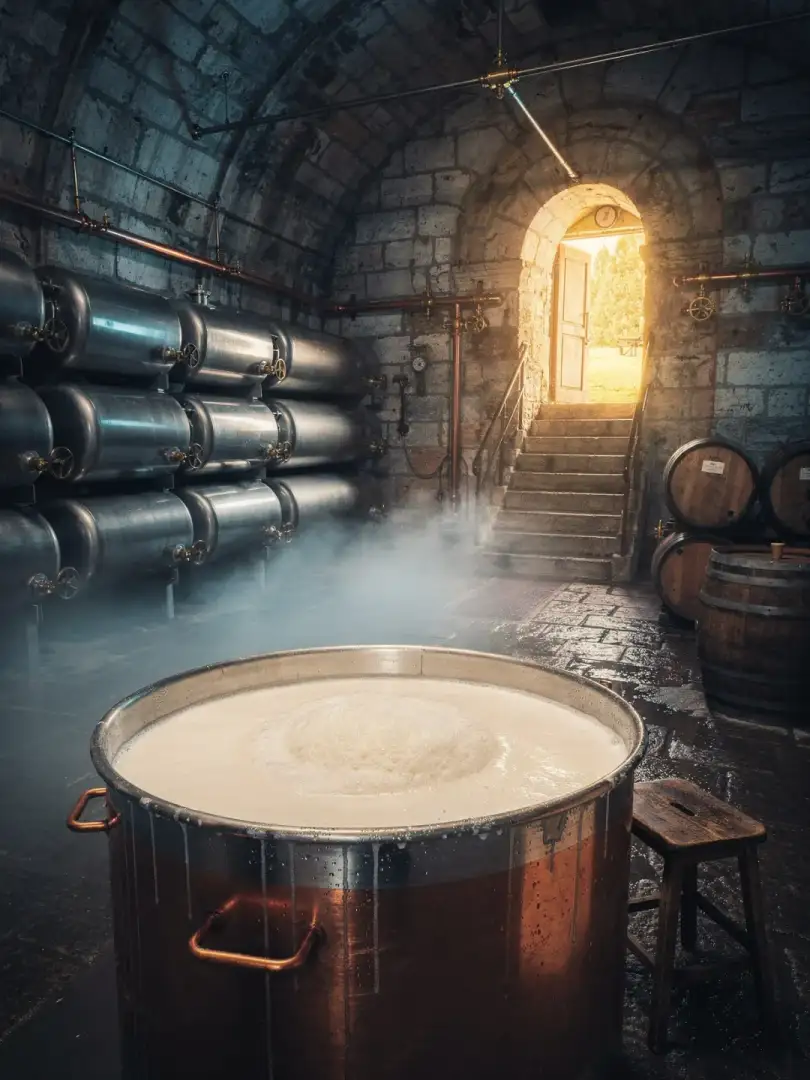
Primary fermentation runs at just a few degrees above freezing up to around ten degrees Celsius, noticeably cooler than for wheat beer. Lagering comes next: the young beer rests for weeks in tanks or cellars, the yeast settles out, and the flavor rounds off. It was precisely this cold-conditioning that made exports from Kitzingen possible, since a well-lagered beer held up better on the cart and the river.
Thomas Ehemann is said to have systematically improved his beer's shelf life, using a method he made known early on in the region. The details of his process aren't spelled out in the relevant historical accounts, but the result is clear: from 1820, his brewery in Kitzingen supplied markets far beyond the town.
Today, breweries generally work with cultured pure yeast strains. They recover the yeast after fermentation, reuse it across several brews, and refresh it at some point. Whether and how Würzburger Hofbräu does the same hasn't been published by the brewery. The same goes for lagering times and temperatures at the other operations in Mainfranken. Anyone keen to know should ask on a brewery tour, since the fermentation cellars are usually the most interesting part of the visit.