Bought In, Not Grown Locally
Hops
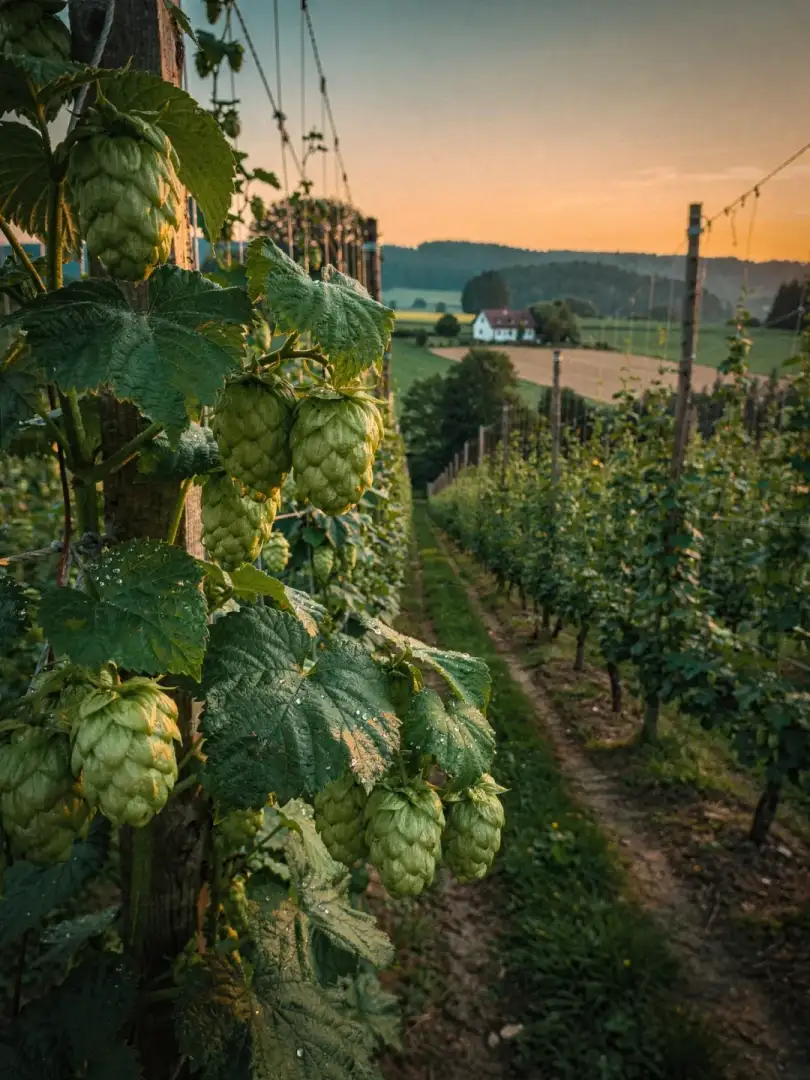
Vines grow in the Maindreieck, not hop bines. The hops for Mainfranken Bier come from other growing regions in Bavaria, where they climb tall trellis systems. Germany grew hops on 18,962 hectares in 2025, and local brewers buy them in as pellets or whole cones.
Hops serve two purposes in beer. The alpha acids in their cones give the wort bitterness when boiled for a long time. The essential oils, on the other hand, bring aromas of grass, flowers, or citrus, which are only preserved if the hops go into the kettle late. So hops are added early for bitterness, late for aroma.
Hops once served a third purpose too: keeping beer fresh for longer. That mattered for Kitzingen, which shipped its beer over long distances in the 19th century, subjecting the barrels to lengthy journeys.
In the region's flagship beers, bitterness stays restrained. According to BJCP style guidelines, a Helles sits at 16 to 22 IBU, a German Pils at 22 to 40, and a Festbier at 18 to 25. Drink beer in the Würzburg style and you'll taste malt and bread crust more than any sharp hop bite. Which varieties the breweries actually use isn't consistently disclosed, and this piece leaves that question deliberately open.
Anyone who's held hops in hand knows the sticky, resinous smell. Lupulin, a yellow powder between the petals of the cone, contains both the bittering compounds and the oils. Some of the aroma boils off during the brew, which is why some batches are hopped in two or three additions.