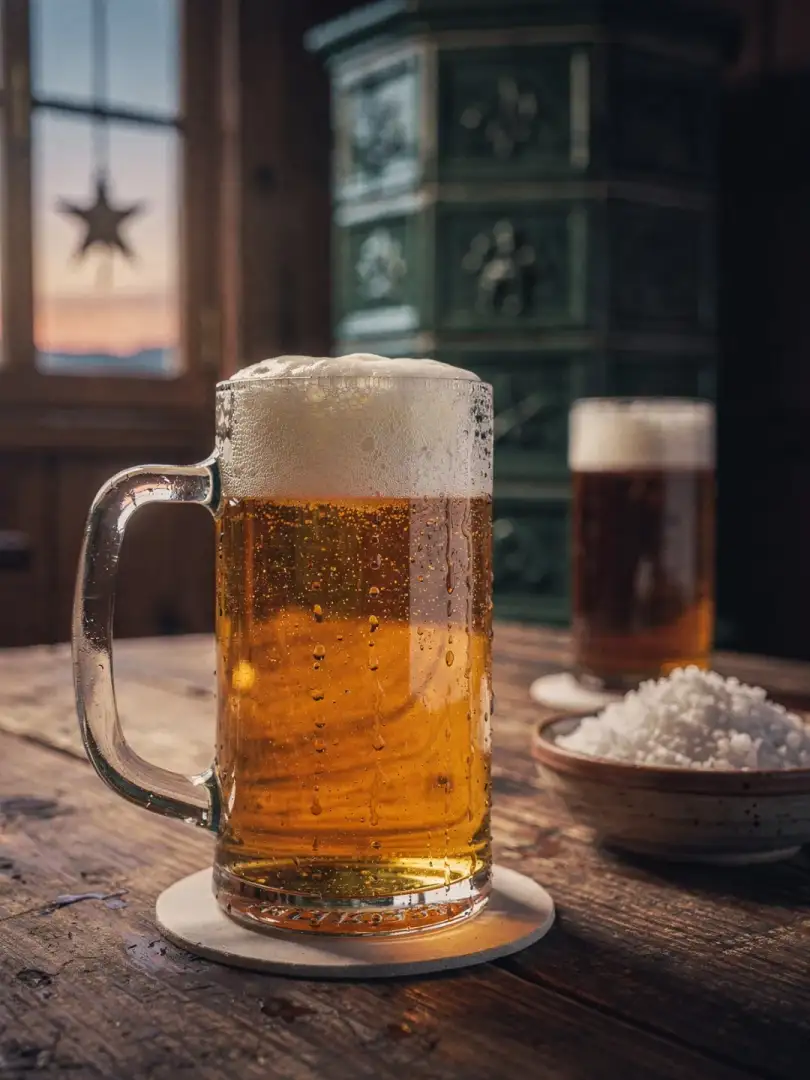
Zoigl and Kellerbier
Beer Styles
Does Zoigl count as a Kellerbier? It's related, but not a style in the strict sense. The term 'Zoigl' describes an origin and a brewing method, not a recipe with set figures. There's no dedicated style guideline for it, say, in the BJCP competition guide.
What sets Zoigl apart from Kellerbier is the path to the glass. Kellerbier is an unfiltered beer matured in the cellar, offered by many breweries across Franconia and Bavaria. Zoigl, by contrast, is brewed communally, with fermentation happening at the Rechtler's home.
Beer databases typically list Zoigl at around 4.5 to 5.5 percent ABV, with an original gravity of roughly 11 to 14 percent. Original gravity measures the dissolved solids in the wort before fermentation and indicates how robust the beer will turn out. These are empirical values, not a fixed standard.
For comparison, the profile shows two neighboring styles from the BJCP catalog: the light, mild Helles and the more robust Märzen. Depending on the house, Zoigl falls somewhere in between. The figures given apply to the comparison styles, not to Zoigl itself.
And what about Zwickelbier? Both are naturally hazy and low in carbonation, but 'Zwickel' originally refers to the sample a brewer draws from the lagering tank via the Zwickel tap. That's brewery jargon, not a recipe. With Zoigl, on the other hand, the name tells you where and how the beer was made, not how it has to be brewed.
Zoigl has little in common with Pilsner. It lacks that pronounced bitterness, and the beer is softer and maltier.
Helles (comparison style)bottom-fermented
- Original gravity
- 11–11.9 °P
- Alcohol
- 4.7–5.4 % vol
- Bitterness
- 16–22 IBU
- Colour
- 6–10 EBC
Golden yellow, malty, low bitterness, barely any hop aroma.