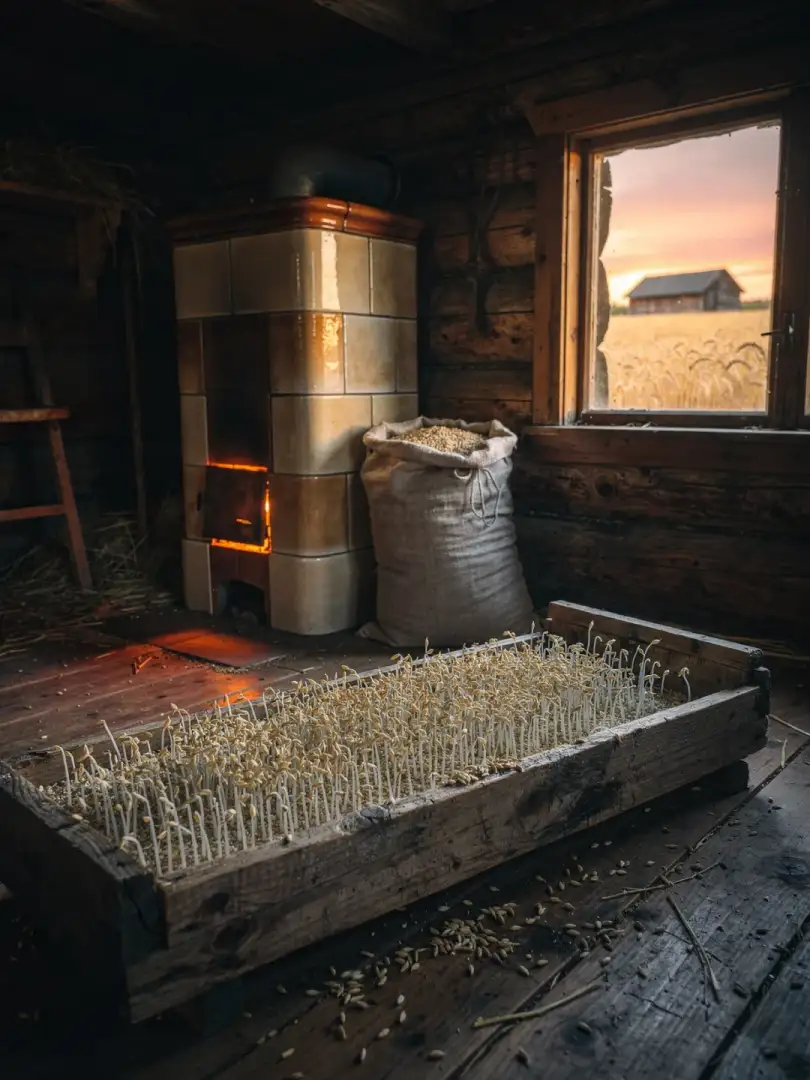
Barley, unsmoked
Malt & Grain
On the island farms, one simple rule applied: barley and nothing else. Beer researcher Lars Marius Garshol has studied old accounts of Koduõlu and found no other grain in the brew. Farmers malted the grain themselves, in the kitchen or farmyard, with no maltings involved.
They soaked the grain in a sack or wooden tub. Then they spread it out in a wooden frame until it germinated. Finally, it dried on a heated floor or in the sun. The result was very pale malt with no smoky character. Sometimes a caramel malt also formed in the oven, giving the beer a brownish colour.
Quantities were generous. According to Garshol's compilation, between 0.29 and 0.4 kilograms of malt went into the pot per litre of beer—a lot for a farmhouse kitchen. The beer turned out correspondingly strong and sweetish, since some of the malt sugar remained unfermented.
Mashing was usually done in a single infusion, pouring hot water over the grain in one go. Some brewers added a second dose of hot liquid partway through. The wort then ran through a filter bed of juniper branches, sometimes topped with straw. On Saaremaa, this hands-on work at the hearth defined the beer's character, from grain to filter.
Modern breweries work very differently. Põhjala's Öö relies on heavily roasted malt that, according to the brewery, brings espresso and toffee notes to the glass. There, the focus is on roasted character; on the farms, it was about fullness and sweetness.