Ale, Not Lager
Yeast & Fermentation
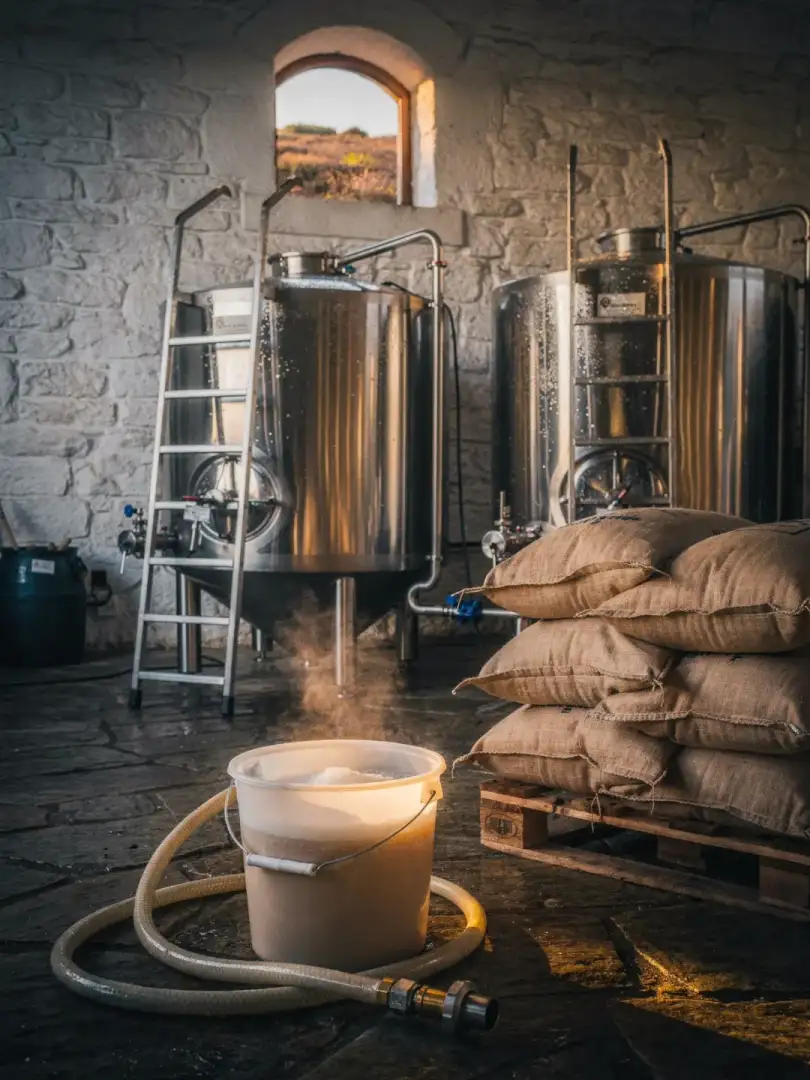
Are Breton beers top- or bottom-fermented? The well-known styles from Coreff and Lancelot belong to the English brewing tradition—which is how the Coreff founders learned their craft in England—and are therefore mostly top-fermented. That means the yeast works warm, at around 15 to 24°C (59–75°F), and collects at the top of the fermentation tank by the end.
Top-fermenting yeast produces byproducts that come across as fruity or spicy on the palate. A lager is fermented cold and tastes cleaner and more restrained. With an ale, the yeast is allowed to have its say, and you can taste it in the Coreff Ambrée or the Telenn Du. That's especially true of beers made in Morlaix and Carhaix in Finistère, following the English model.
Fermentation takes a few days; afterward the beer matures for one to several more weeks in the tank or bottle. During this time the yeast breaks down unwanted compounds and settles as sediment. Not every beer is filtered clear afterward—some are deliberately left naturally hazy.
In Brittany, it's not just beer that ferments—apples do too. Cidre belongs to the region just as much as the galette, and it's fermented from apple juice. Taste both, and you'll notice how differently yeast can behave: on malt sugar in beer, on fruit sugar in cider.
The English influence even shows up in the vocabulary: a microbrewery, in the sense the Coreff founders meant it, is a small operation where a brewmaster personally oversees the beer, brewed in small batches.