Bitterness from Elsewhere
Hops
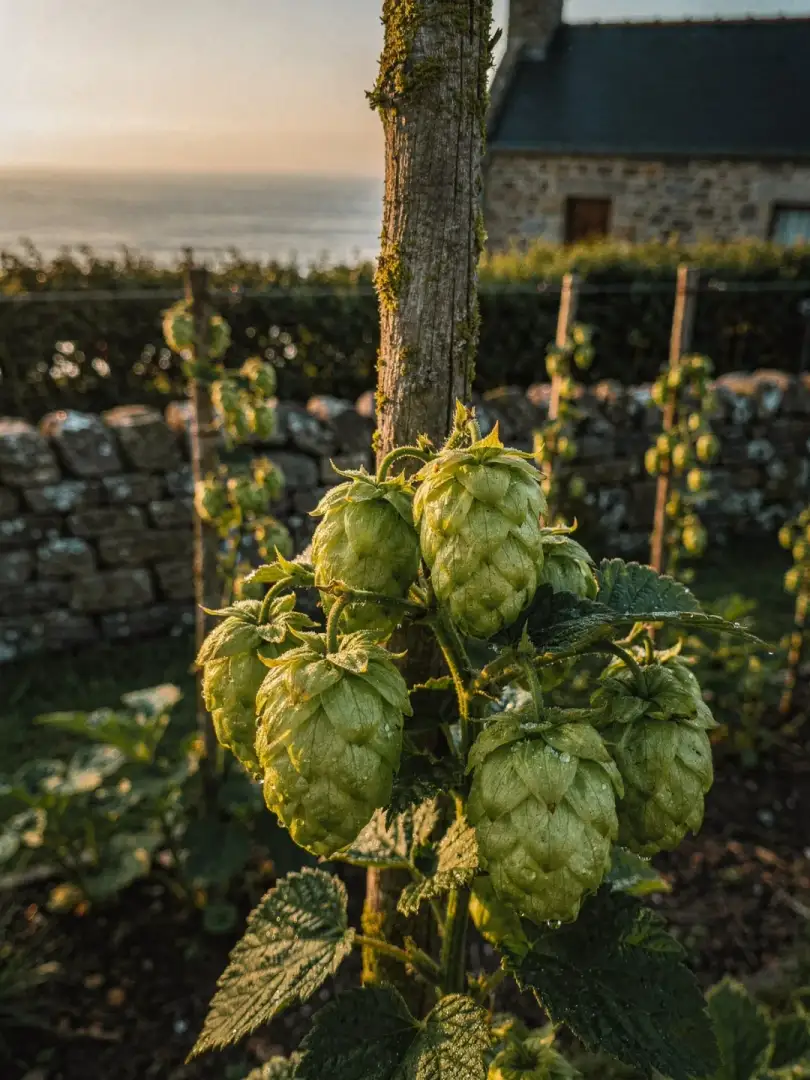
Why does beer taste bitter? That's down to the hops—specifically their alpha acids, which convert into bittering compounds when boiled in the wort, the still-unfermented liquid. The longer they boil, the more bitter the beer becomes. Add hops late, and volatile oils survive that smell of flowers, herbs, or fruit.
Hop gardens like those in Bavaria don't define the Breton landscape. France's famous hop-growing region is Alsace, in the east of the country—about as far from the Atlantic coast as you can get. For most Breton brewers, hops are therefore a raw material sourced from elsewhere.
How bitter a beer is gets measured in IBU, a unit for bittering compounds. A stout, under competition guidelines, often sits well above a witbier, yet doesn't necessarily taste more bitter, because roasted malt and sweetness mask the bitterness. The number is a reference point, not a taste test, and anyone taking it seriously only compares beers within the same style.
With Telenn Du, people describe a gentle bitterness that comes from both the buckwheat and the hops. That fits the beer's whole idea, since it's meant to complement the hearty galette rather than compete with it. Specific hop varieties are named by the breweries themselves and vary from batch to batch. At Coreff in Carhaix, too, the hops don't come from a field next door, and the recipes aim for balanced beers where malt and hops hold each other in check.