Blé noir, Grain
Malt & Grain
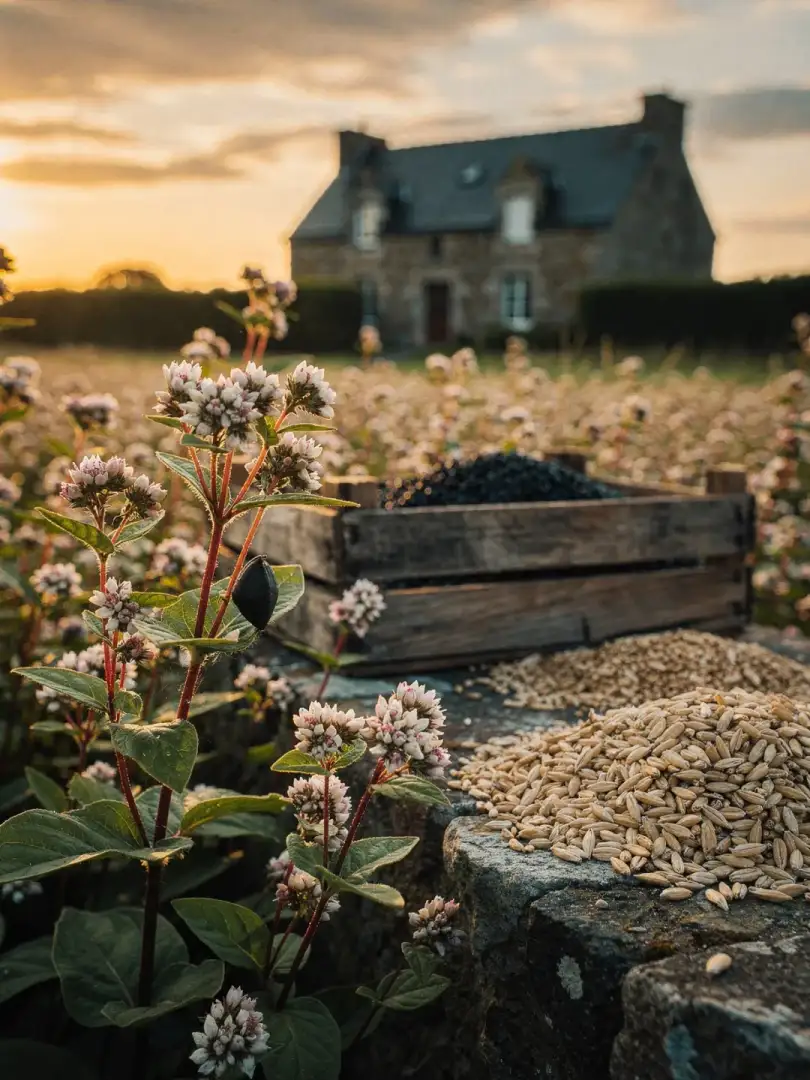
How is beer brewed from buckwheat? Buckwheat is called blé noir in French—black wheat—because of its dark-husked grains. Botanically it isn't a cereal at all, but a member of the knotweed family; even so, it's used like one, supplying starch that the brewer converts into sugar. It has grown in Breton fields for a long time, and in the region's cuisine it's the foundation of the galette.
In 1993, Brasserie Lancelot turned it into a beer and named it Telenn Du, Breton for 'black harp.' According to the brewery, it's made of equal parts buckwheat and barley malt and has 4.5% alcohol. It's considered one of the first buckwheat beers in Europe, and the buckwheat comes from organic farms in Brittany.
Barley malt still plays a role, though, and there's a reason for that. Malt is grain that's been allowed to germinate and then dried—kilned, in brewing terms. This produces enzymes that later break down the starch. Barley supplies those enzymes, while buckwheat contributes starch and flavor.
Important for anyone avoiding gluten: buckwheat itself is gluten-free, but Telenn Du is not, since barley malt contains gluten. So a buckwheat beer from Brittany isn't automatically a gluten-free beer.
The region's classic styles also rely on malt. An Ambrée owes its copper color to more heavily roasted malt, a stout its nearly black hue. Which maltster supplies which malt is something each brewery states for itself.