Pilsner and Lager
Beer Styles
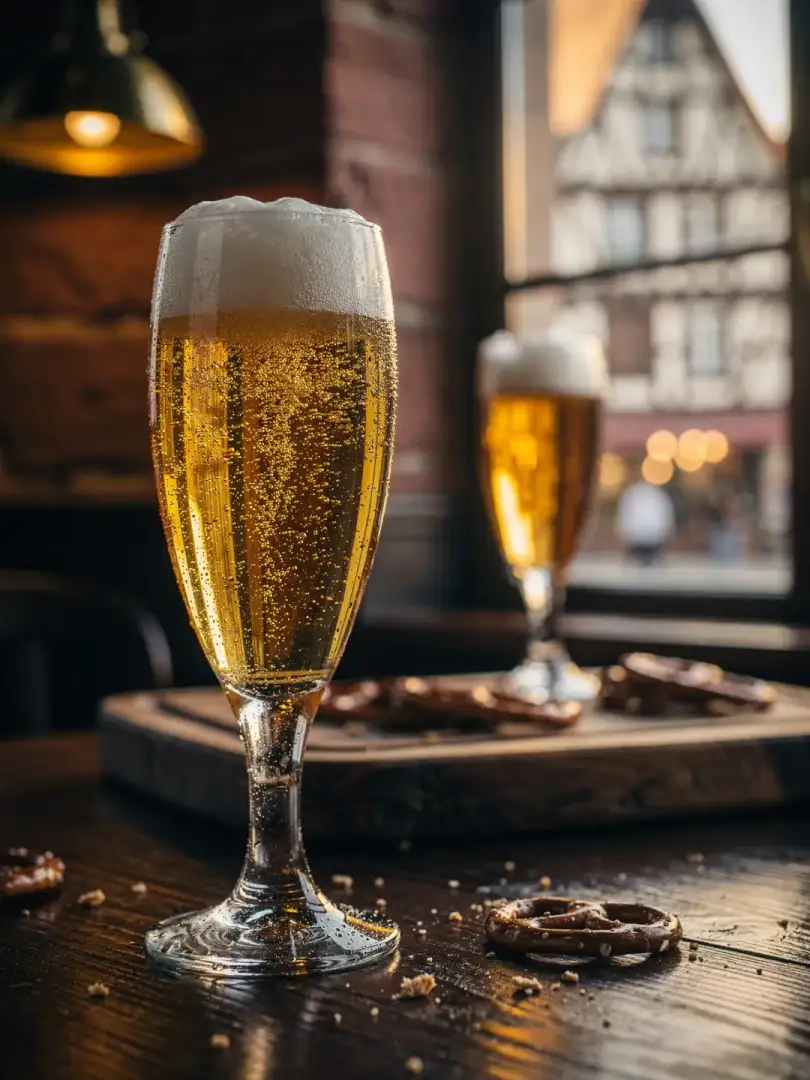
What is an Alsatian beer? There's no protected style of its own. What's usually meant is a pale, bottom-fermented beer in the Central European tradition, served as lager or pilsner. It's golden to straw-colored, bright, and crowned with a fine head. It's brewed in Obernai just as it is in Hochfelden, and the two places are closer in flavor than the size of their breweries might suggest.
What's the difference between pilsner and lager? Pilsner is drier and more hop-forward: German pilsner, by BJCP standards, has a bitterness of 22 to 40 IBU. An international pale lager stays milder and softer at 18 to 25 IBU. Kronenbourg 1664, at 5.5 percent alcohol, falls within the lager range rather than that of classic pilsner.
The contrast with the north of the country is stark. Bière de Garde comes from northern France, runs 6 to 8.5 percent alcohol, and can be either top- or bottom-fermented. Order a lager in Alsace, and you'll get something different: lighter, fresher, and meant to accompany a meal.
How much alcohol does a lager have? Typically 4.5 to 6 percent. The figure reflects the original gravity, the dissolved sugar before fermentation measured in degrees Plato—the more of it the yeast converts to alcohol, the stronger the beer. For a pale lager, the BJCP guidelines cite 10.5 to 12.4 degrees Plato, a competition range rather than a strict recipe.
Pale Lager (International)bottom-fermented
- Original gravity
- 10.5–12.4 °P
- Alcohol
- 4.5–6 % vol
- Bitterness
- 18–25 IBU
- Colour
- 4–12 EBC
Golden, bright, mild malt sweetness, restrained bitterness, smooth finish.