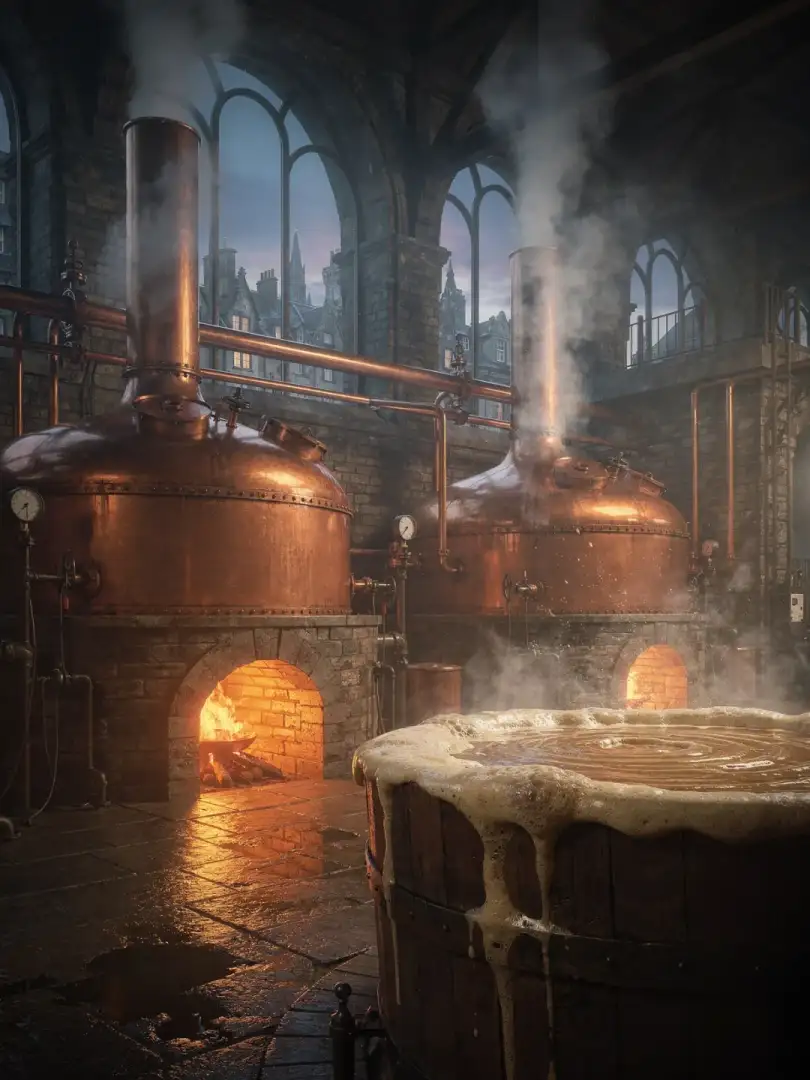
Open Copper Kettles
Yeast & Fermentation
Scottish ales are top-fermented, meaning the yeast collects at the top of the fermentation vessel. It's the same species, Saccharomyces cerevisiae, used for brewing in England and Ireland. Bottom-fermenting lager yeast, by contrast, is a hybrid of two species and works cooler and more slowly. Edinburgh stuck with ale yeast because it ferments reliably at cellar temperature.
Before fermentation comes the boil. At the Caledonian Brewery, this took place in open copper kettles heated directly by fire. According to the brewery, these were the last direct-fired open kettles in Britain. The fire beneath the copper caramelizes some of the sugar on the vessel walls, giving the wort, the boiled sugar solution made from malt, its depth. The equipment dated from Victorian times.
Since the Slateford Road brewery closed, these kettles have stood idle. Anyone brewing ale in Edinburgh today does so in modern vessels, as at Stewart Brewing on the edge of the city. The fermentation vessels there are kept cool, and the yeast is reused from batch to batch, as is customary with ales.
Fermentation itself usually takes only a few days for ales. Scottish brewers are often said to ferment somewhat cooler than their English counterparts, keeping the yeast's fruity by-products in check. The beer then undergoes a further conditioning in the cask; with cask ale, beer served without added pressure, it quietly continues to ferment there, developing its fine natural carbonation.