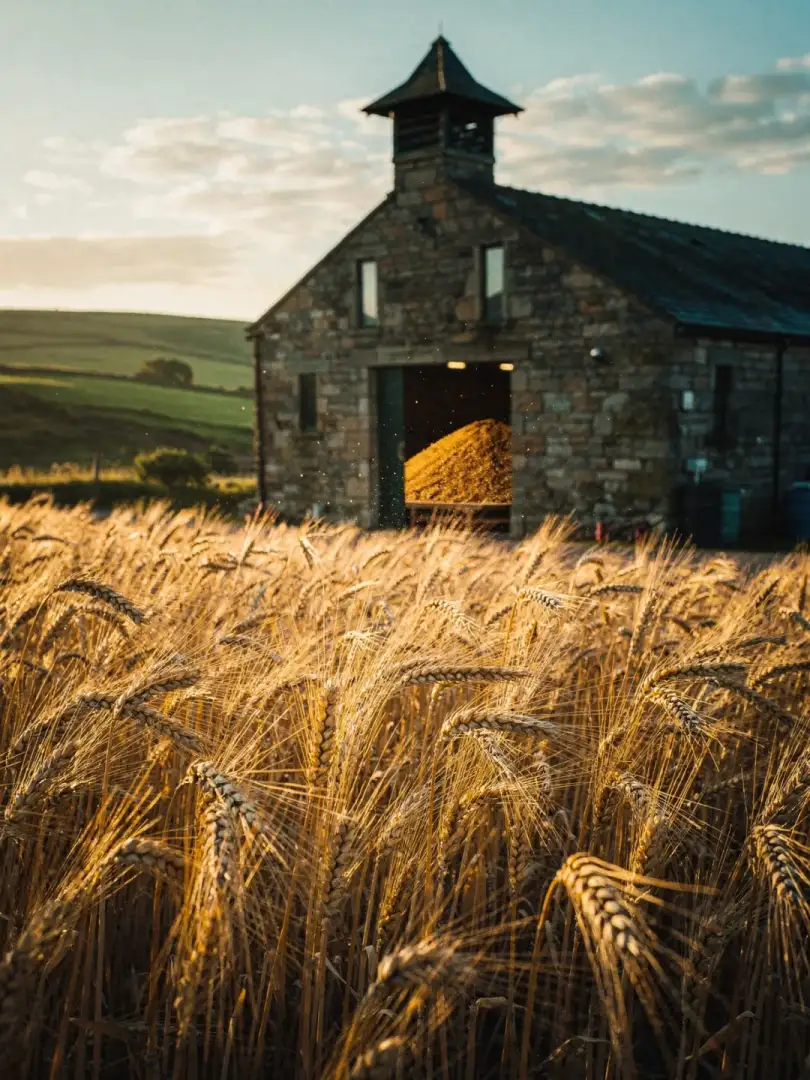
Maltmen and Barley
Malt & Grain
Before factories existed, Glasgow's maltsters had their own guild, the Incorporation of Maltmen. The name says it all: no malt, no beer. Malting means letting barley germinate in water, then drying it in a kiln, a heated chamber where the grain develops colour and flavour as the heat rises. Kiln it longer and hotter, and you get darker, toastier malt; dry it gently, and the beer turns paler.
Scotland grows plenty of barley, much of which goes to whisky distilleries. For beer, it's the same ingredient, just a different path: distilleries turn the malt into alcohol and distil it, while breweries simply let the beer ferment. The malt itself is the same base product. The fact that both industries thrive side by side in the country has given Scottish malt a strong reputation.
A pale lager like Tennent's Lager lives on pale malt. It's gently kilned, giving the beer a straw-yellow to golden colour and a soft, lightly bready core. The paler the malt, the more clearly hops and yeast come through.
With WEST's beer, the rule is stricter. The Reinheitsgebot permits only barley malt, hops, water, and yeast, and the brewery says it adheres to this for all its beers.
The traditional Scottish counterpart is the darker ales, where more roasted malt goes into the kettle. Scottish Heavy stays malt-forward, sweetish and caramelly, with little hop character. In Glasgow, though, it appears more as a pub classic than as a flagship brand from the big breweries.