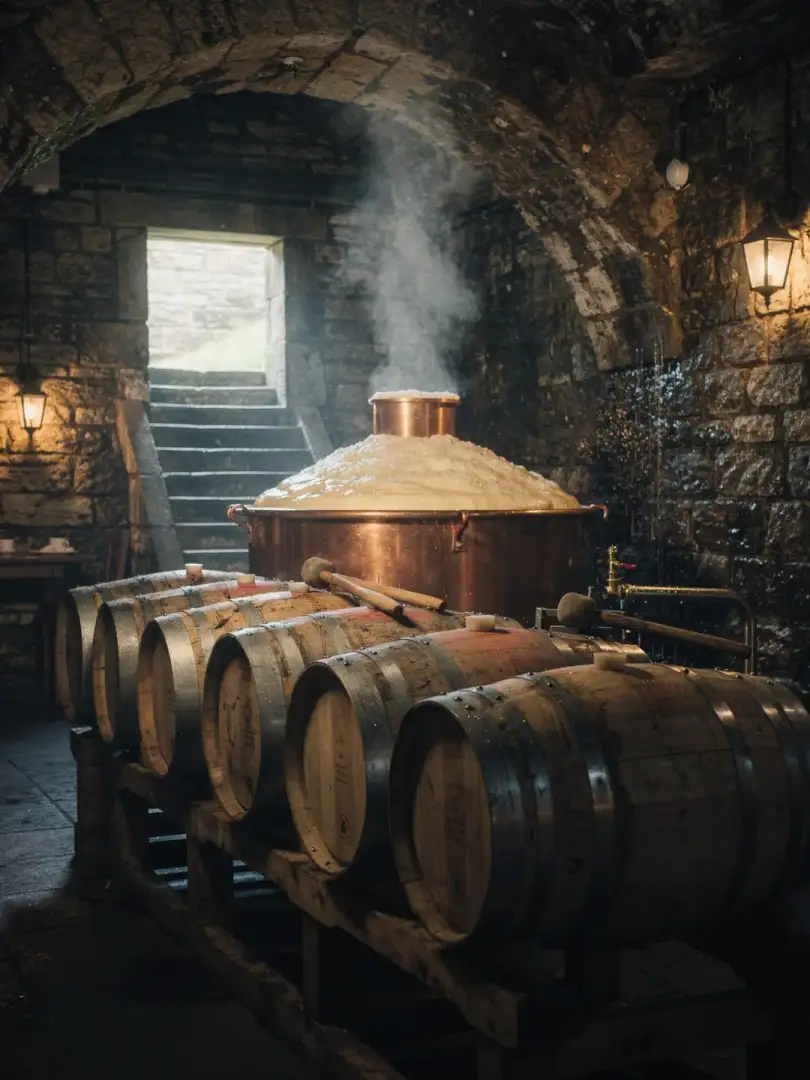
Cask in the cellar
Yeast & Fermentation
What is real ale, and how is it fermented? Real ale is cask beer that undergoes secondary fermentation in the cask and is served without added carbon dioxide pressure. The yeast works top-fermenting, meaning it collects at the top of the vessel during fermentation. It likes warmth, so an English ale ferments fully within a few days.
After primary fermentation, the young beer is filled into the cask with a bit of yeast and sugar, as ordered by the pubs. There it undergoes secondary fermentation. The resulting carbon dioxide stays in the beer, and the cask is served without pressurized gas. This is called cask conditioning.
In the pub cellar, the cask rests on a stillage and needs rest so the yeast can settle. Cellar temperatures are usually around 11 to 13 degrees Celsius. Then the tap is knocked in, and after a few hours the first glass can be pulled clear.
Breweries like Wye Valley in Stoke Lacy or Teme Valley in Worcestershire mostly use their own yeast strains, which they carry on for years. Yeast can be passed on like a sourdough starter: part of the sediment starts the next brew. Which strains these are exactly, few reveal. The character is fruity, a bit like orange marmalade or ripe pear, and complements the malt and hops.
The beer is fresh while resting in the cellar, and lasts only a few days once tapped. Pubs that sell fewer casks therefore order smaller containers. Live beer with yeast is a natural product, and if you see the cloudy layer at the bottom of the cask, it's not spoiled beer.