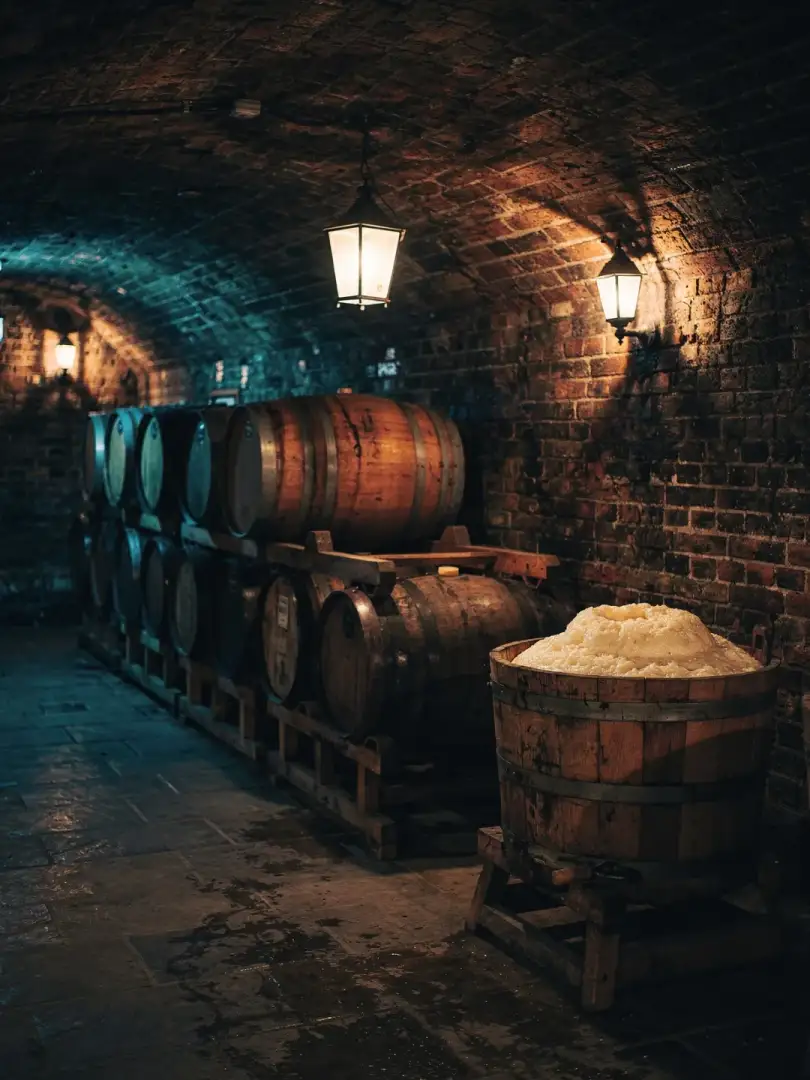
Fermentation in the Cask
Yeast & Fermentation
What is real ale? This is what the Campaign for Real Ale, known as CAMRA, calls a beer that continues fermenting in the cask and is served without added carbon dioxide. CAMRA was founded in 1971, when many pubs were switching to filtered cask beer under pressure, and it has championed traditional cask beer ever since.
How does it work? London bitter and porter are top-fermenting beers. Their yeast works at room temperature up to about 20 degrees Celsius, often for a week, producing fruity aromas along the way. The young beer then goes into the cask, the pub's barrel. Before this, clarifying agents are added to the beer, often isinglass made from fish bladders, along with a little sugar or hops. The residual yeast continues fermenting in the cask, creating a gentle fizz.
In the pub's cellar, the cask rests for several days until the yeast has settled. The landlord, called a "cellarman" in Britain, taps it and checks its condition. A standard cask is a "firkin," holding nine imperial gallons, or about 41 liters. Once tapped, the beer keeps for only a few days.
In the past, porter fermented and matured for long periods in large wooden vats, and these were the very vats that burst at Meux in 1814. The disaster is considered one reason brewers later switched to vessels made of concrete and metal. Today, London's breweries ferment in steel tanks.
Bermondsey's small breweries fill some beer into cask, some into keg, meaning barrels under carbon dioxide pressure. Both have their devoted followers.