Bitter and Porter
Beer Styles
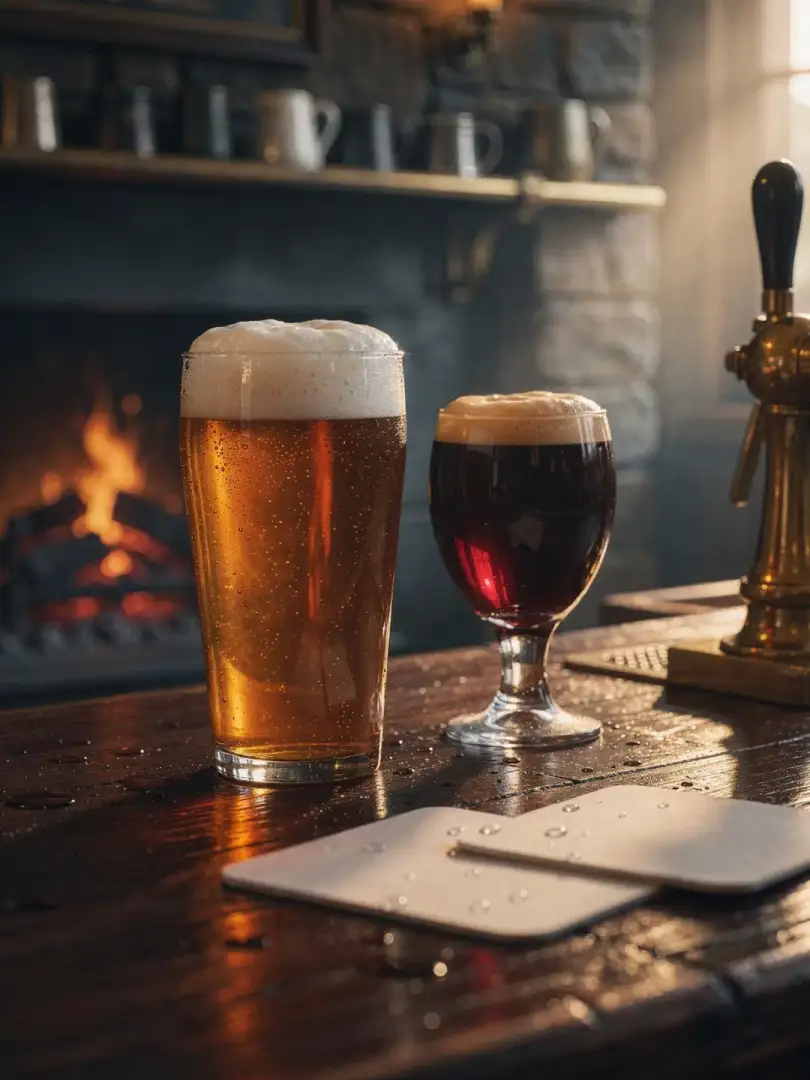
What is a bitter? A bitter is a copper-coloured English ale, dry, with bready malt and a gentle bitterness, drunk fresh from the cask. The name came about because, compared to sweeter milds, it tasted more bitter.
The BJCP style guide distinguishes three levels. Ordinary bitter has 3.2 to 3.8 percent alcohol, best bitter 3.8 to 4.6, and strong bitter, or ESB, 4.6 to 6.2. At Taylor, Black Sheep and Theakston, this middle ground is usually labelled best bitter.
Theakston's Old Peculier is classified as an old ale. This style is darker and stronger, with notes of dried fruit, liquorice and molasses, and 5.5 to 9 percent alcohol. The name derives from the Peculier of Masham, an ecclesiastical court that held special jurisdiction.
Samuel Smith is also known for its dark beers. Taddy Porter and Oatmeal Stout are among the brewery's classics. A porter is a dark, roasty ale that originated in London in the 1720s.
The difference from lager lies in the yeast and the temperature. For anyone used to a pilsner, a bitter feels less cold, less fizzy and maltier. Alcohol and bitterness sit closer together, and it drinks more like a bread-based beverage than a refreshing one. It's exactly this contrast that makes the Yorkshire style so intriguing for the curious. If you're trying it for the first time, start with a small glass.
Best Bittertop-fermented
- Original gravity
- 10–11.9 °P
- Alcohol
- 3.8–4.6 % vol
- Bitterness
- 25–40 IBU
- Colour
- 16–32 EBC
Amber to copper, bready malt, earthy hops, dry finish.