Warm and Quick
Yeast & Fermentation
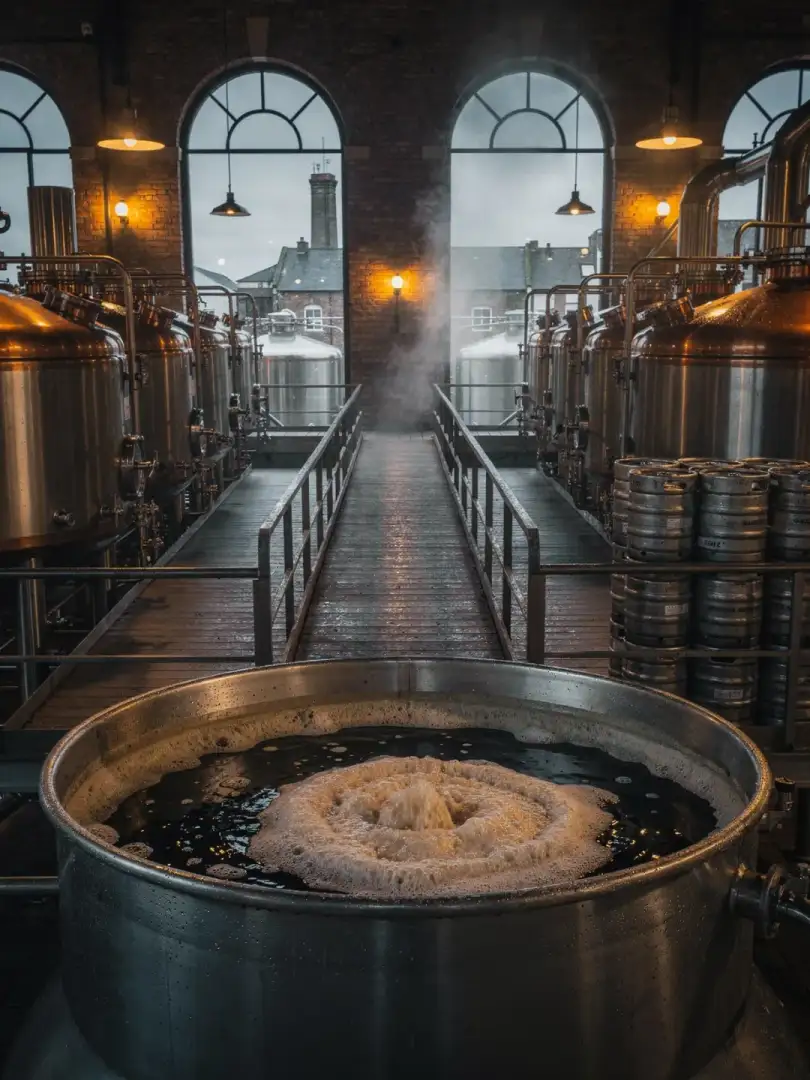
Stout is top-fermented. That means the yeast works warm and collects at the top of the fermentation vessel. In the styles grouped together as ale, fermentation moves faster than with lager, which conditions cool and long.
Warm fermentation brings fruity esters from the yeast — small notes of berries or pear. In a black stout, they hide behind the roasted character. If you pay close attention, you'll find them as a quiet sweetness beneath the coffee.
The style guideline also classifies Irish stout as top-fermented. The difference from lager lies in the yeast and the warmth, not in the color. A pale ale and a black stout therefore ferment on the same principle. Beamish is now brewed at the former Murphy's plant on Leitrim Street, and that changes nothing about the fermentation principle.
What defines Cork is the casks and kegs. A cask is filled with beer that's clear enough after a short conditioning period, and with many stouts, nitrogen is mixed into the carbon dioxide at the tap. That produces the fine, creamy bubbles that make a stout taste almost silky straight from the tap.
The small breweries take a different path. Franciscan Well advertises that its beers are neither pasteurized nor micro-filtered. There, the yeast is allowed to stay in the beer, and the result tastes a bit livelier than the filtered cask beer from the big brands. Elbow Lane and Rising Sons are also among the city's small houses brewing ales outside the Heineken fold.