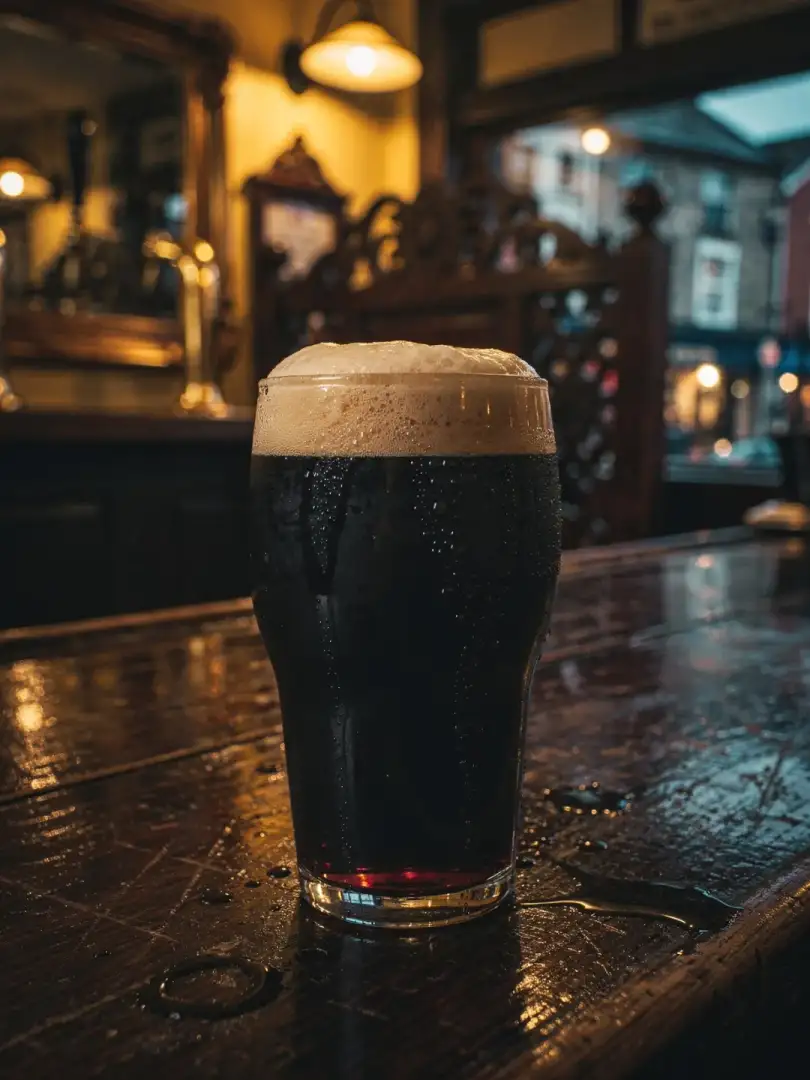
Stout from Cork
Beer Styles
What's the difference between stout and porter? Both are dark and top-fermented, and the name stout simply means strong. London's stout porter — the stronger version of porter — later became known simply as stout. Ireland made the style famous, though it didn't invent it. Murphy's Irish Stout and Beamish carry that history right into the city on the River Lee.
The Irish stout described by the style guideline is a lean beer. It has 3.8 to 5 percent alcohol, 9 to 11 degrees Plato, and a deep black color. In the mouth it feels drier and lighter than its appearance suggests.
Is there a Cork stout that differs from the Dublin version? Drinkers in Cork say yes, and they taste it mainly in the sweetness. Murphy's and Beamish are considered milder and less bitter than the Dublin original, though this impression remains a matter of taste rather than any official standard.
Beamish and Murphy's are, then, two answers to the same question. Both stand on tap in Cork pubs and are poured with nitrogen.
Alongside stout, Ireland also has Irish red ale. It too is top-fermented, sits at 3.8 to 5 percent alcohol, and glows copper-red. It's only lightly roasted and comes across malty and gently caramel, so the difference from stout lies in the roasting, not the strength. Anyone who tries both in Cork quickly understands that roasting is what defines the style.
Irish Stouttop-fermented
- Original gravity
- 9–11 °P
- Alcohol
- 3.8–5 % vol
- Bitterness
- 25–45 IBU
- Colour
- 49–79 EBC
Deep black, roasted aromas of coffee and cocoa, dry, lean-bodied.