Warm and Top-Fermenting
Yeast & Fermentation
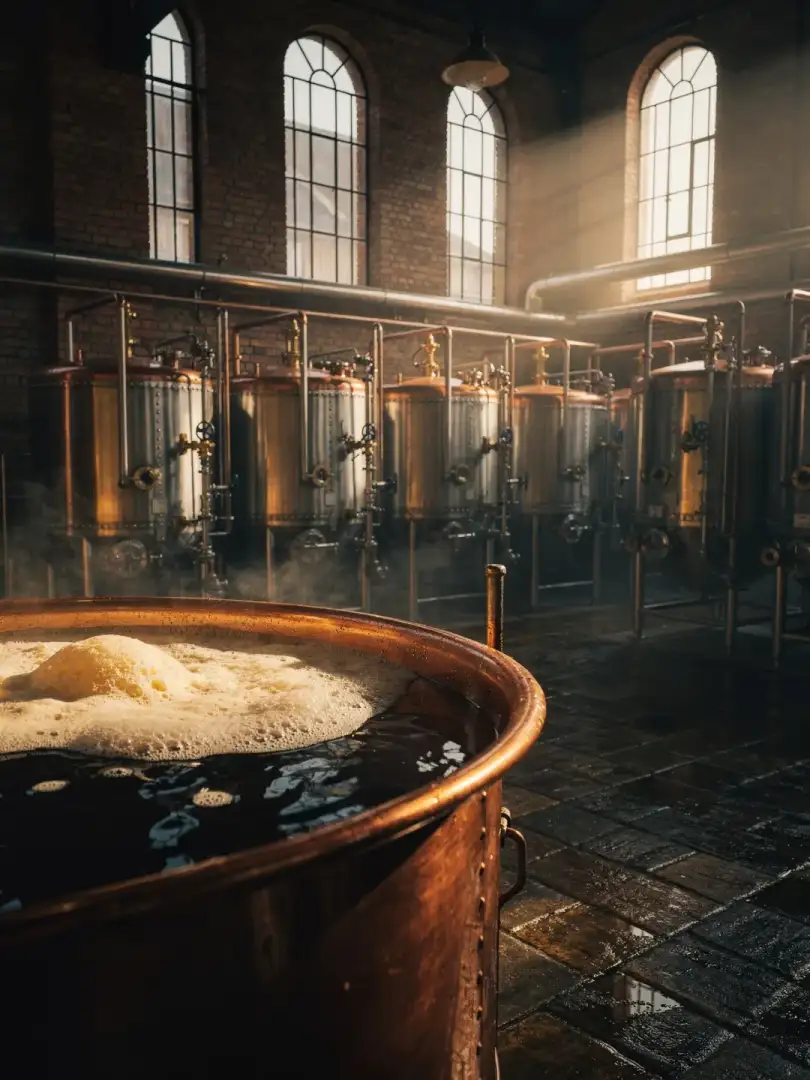
Is Guinness an ale or a lager? It's an ale. The yeast ferments at the top, meaning it rises during fermentation and forms a layer on the surface. It needs warmth to do this, unlike cold-loving lager yeast. As a result, the beer is ready in days rather than weeks. Even Guinness Draught, brewed at St James's Gate, starts out as a perfectly ordinary top-fermented beer.
Top-fermenting yeasts produce many secondary aromas during fermentation, known as esters. They smell of fruit or banana and are part of the character of most ales. In stout, roasting largely masks them, contributing to the clean, dark overall impression.
At the end of fermentation, a stout is still flat and rather dull. The creamy head you know from the pub only develops later, and not from the yeast, but from the gas mixed in when the keg is tapped.
Behind this lies a 20th-century development. In 1959, to mark the 200th anniversary of the lease agreement, Guinness Draught launched with nitrogen. The beer gained its fine white head and softer texture, which remain its trademark to this day.
Nitrogen dissolves poorly in liquid and therefore forms tiny bubbles that stay stable for a long time. Pure carbon dioxide, by contrast, produces larger bubbles and a sharper, more prickly sensation. In 1988 came the can with the widget, a small capsule that releases nitrogen when opened and creates the head even from a can. According to Guinness, a mix of around 75 percent nitrogen and 25 percent carbon dioxide is used when pouring from the tap.