Bitterness vs. Roast
Hops
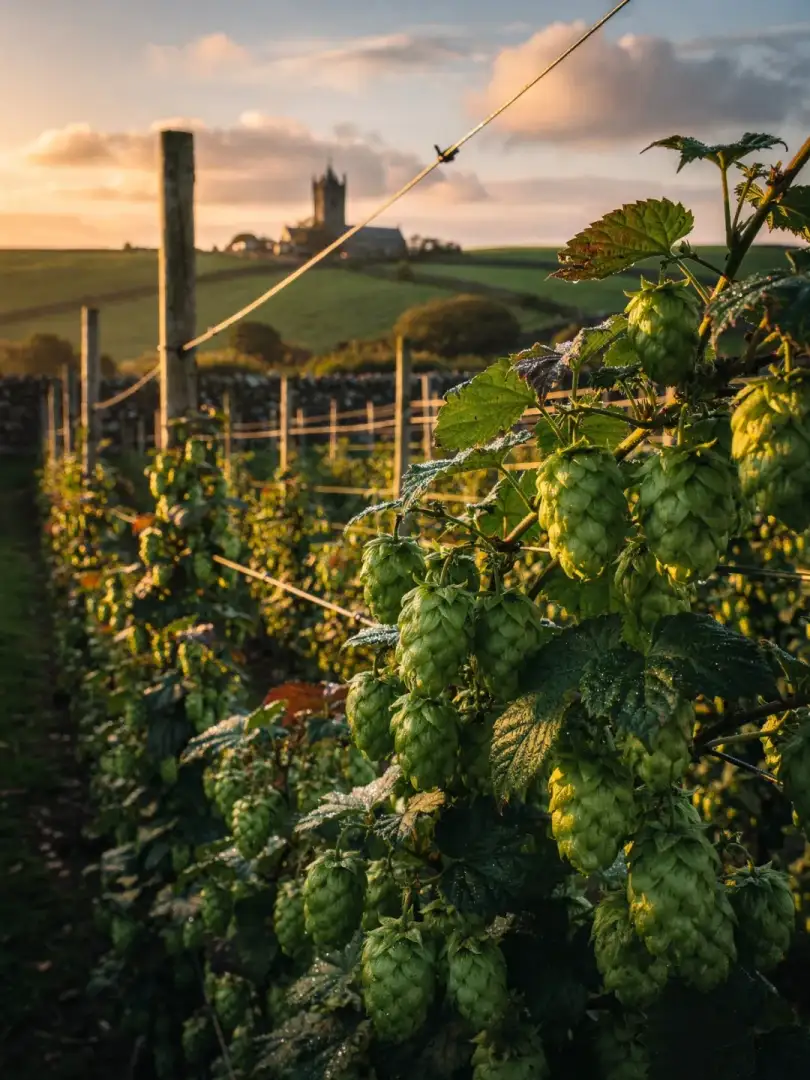
In stout, roasting provides the initial bitterness, and hops add to it. They bring balance to the wort and help keep the beer fresh longer, just as in any beer. How bitter Irish stout ultimately becomes is measured in IBU, International Bitterness Units: the style standard falls between 25 and 45.
That's notably higher than many lagers, yet it's a figure guests often assume is even higher. The reason: hop bitterness and roast bitterness overlap on the palate. Anyone drinking a Guinness Draught usually tastes both at once and finds it hard to tell them apart.
Historically, hops in porter were a matter of shelf life. Their bittering compounds protected the beer from spoilage, and in the 18th century porter was exported to many port cities. This is especially true of robust styles like Foreign Extra Stout, which is more heavily hopped than ordinary draught beer and was made for export.
Which hop varieties Guinness uses today depends on harvest and supply, which is exactly the kind of detail that doesn't belong in a text meant to stay relevant over time. Aroma hops are barely needed in this style anyway: a heavily roasted mash masks any floral or fruity hop notes.
Anyone tasting a stout in Dublin should focus more on the finish. It's dry, slightly bitter, and recalls dark chocolate or strong black coffee. The beer itself isn't sweet, even though the creamy head suggests otherwise.