Stout and Foreign
Beer Styles
What's the difference between stout and porter? The debate is as old as the two words themselves. Porter emerged from London in the 1720s, and stout was originally the stronger version of it. Today the distinction is loose: porter tends to be rounder and lighter, stout drier and more roasted.
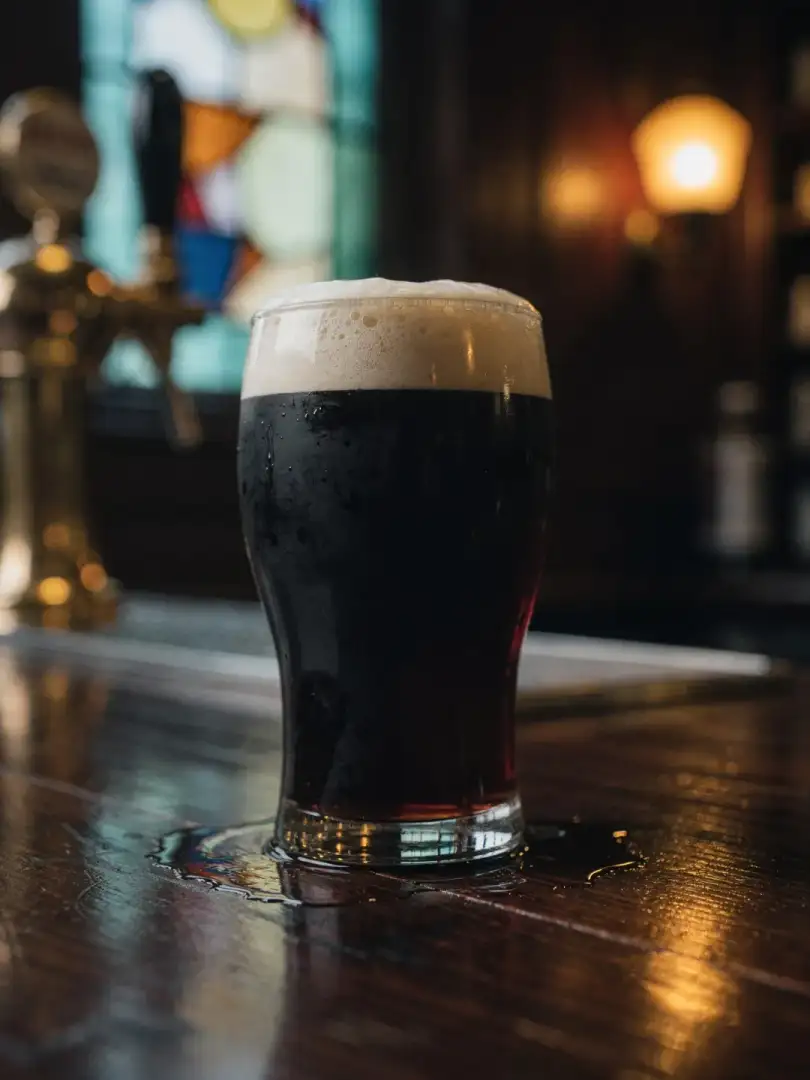
Irish stout, as poured in Dublin, is the lightest member of the family. By style guidelines it has 3.8 to 5 percent alcohol, an original gravity of 9 to 11 degrees Plato, and tastes of coffee, bittersweet chocolate, and dry bread. It's barely sweet, with fullness coming from texture alone.
Guinness Draught, the keg beer from St James's Gate, sits right in this range at around 4.2 percent alcohol. When people say "dry stout," they usually mean this beer and its relatives. The word "dry" describes the dry finish, not a lack of liquid. The black beer feels heavy, yet it's lighter than many a pale strong beer.
Foreign Extra Stout is the bolder sibling. The style was created for export, and by the guidelines it has 6.3 to 8 percent alcohol and noticeably more bitterness. It tastes darker, spicier, and more intense, with notes of dried fruit and espresso.
Irish Red Ale, also common in Ireland, shares only top-fermentation with stout. Its red color comes from a lightly roasted malt, not from black roasted barley, and the bitterness is much milder. Still, in Dublin it's the black pint that dominates.
Irish Stouttop-fermented
- Original gravity
- 9–11 °P
- Alcohol
- 3.8–5 % vol
- Bitterness
- 25–45 IBU
- Colour
- 49–79 EBC
Nearly black, roasted barley, dry-bitter, creamy head, lean body.