Cold, with Must
Yeast & Fermentation
Menabrea brews with bottom fermentation, meaning a yeast that works at low temperatures and settles at the bottom once fermentation is complete. The beer then matures for a long time in cold storage tanks — the practice that gives the style its name: lager means "storage." With a pale beer that has little malt character to begin with, every flaw stands out, which is why the slow, cool maturation matters so much.
The craft brewers of the Langhe mostly work with top fermentation. Top-fermenting yeast ferments at room temperature, faster and with more fruity aromas, and collects at the top of the fermentation vessel. Baladin and many that followed use this method for beers meant to be bold and distinctive.
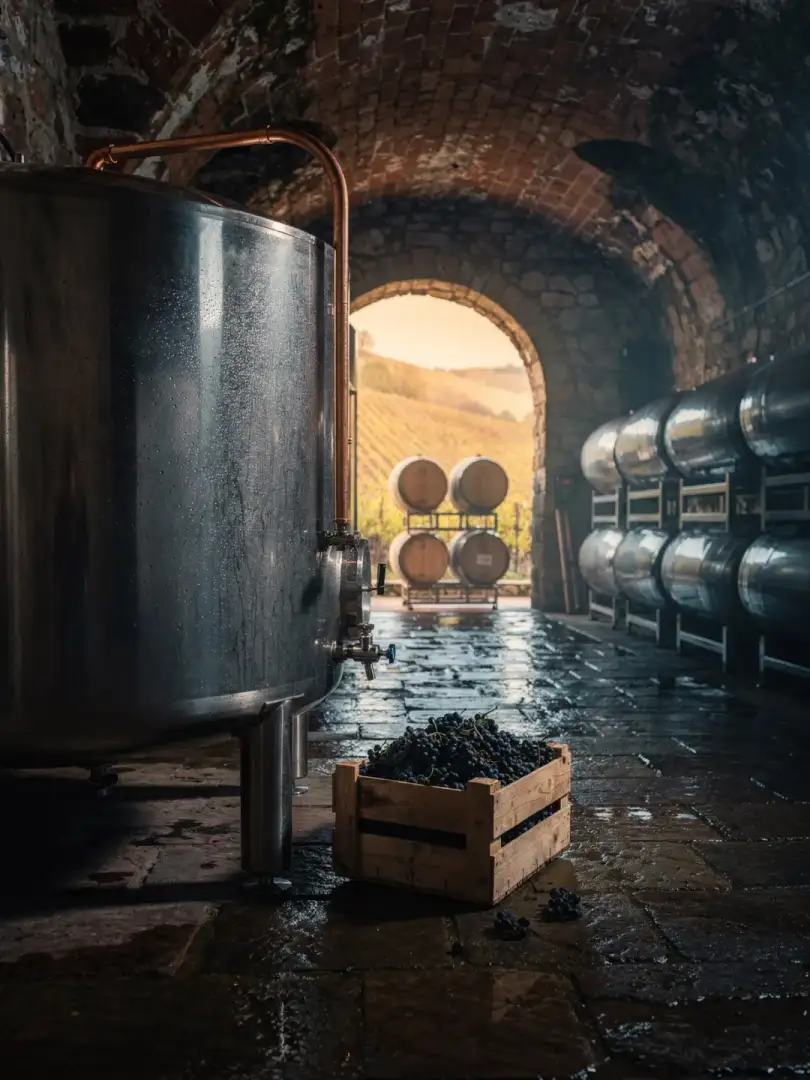
With Italian Grape Ale, a second sugar source enters the picture. The must is added to the beer before or during fermentation, and the yeast ferments the grape sugar as well. This raises the alcohol content, and the beer usually ends up drier than the sweet juice might suggest. Sometimes the wort ferments together with the grapes; other times the must is added later.
One challenge remains timing: grapes in Piedmont are harvested in late summer and autumn. Brewers have to be ready exactly when winegrowers bring in the crop. Anyone wanting to use fresh must has to plan the brewing schedule around the harvest, and this is precisely what links the two crafts together. Some brewers store the must for later use, while others process it the very day it's pressed. The yeast simply takes what it's given and turns it into alcohol and carbonation.