Bought In, Restrained
Hops
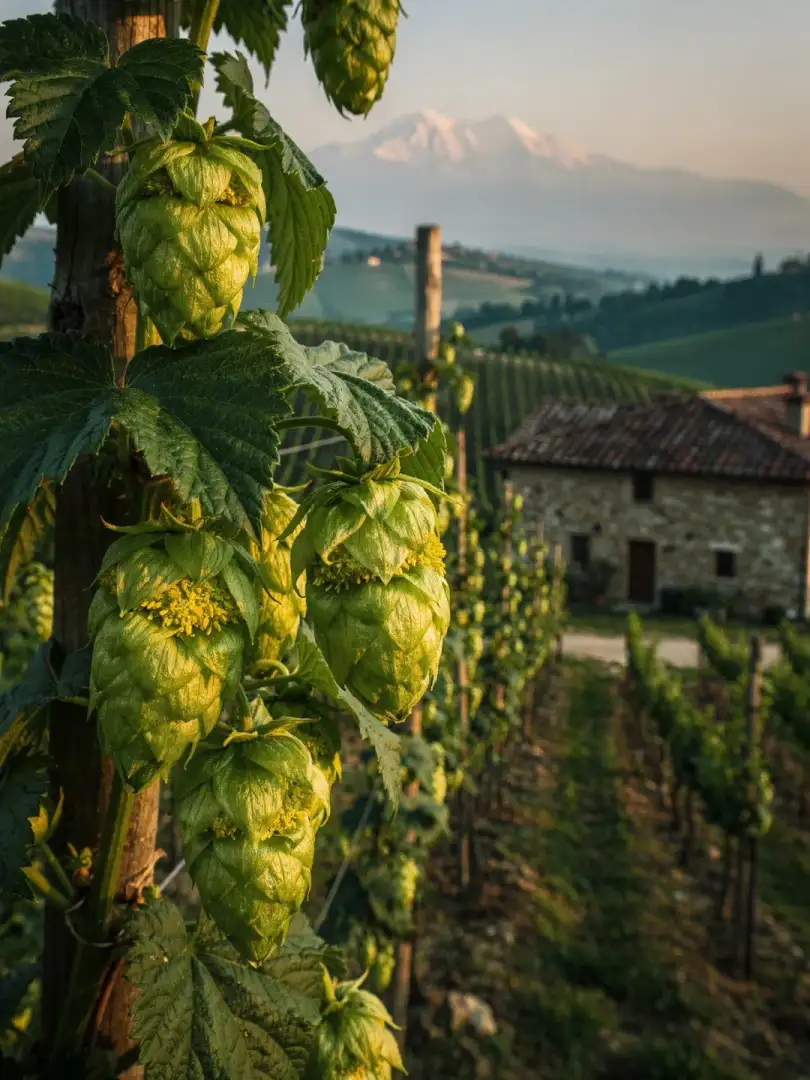
Piedmont is not hop country. There are no hop gardens here comparable to the Hallertau or Saaz; the climate and agriculture are geared toward wine, hazelnuts, and rice instead. Brewers from Biella to Piozzo buy their hops in, mostly from outside Italy, selecting them for aroma and bitterness. That holds true for the big brewery as much as for the small operation brewing just a few hundred liters, and it explains why the region has no hop variety of its own.
Hops serve two purposes. The bittering compounds, known as alpha acids, balance out the malt's sweetness; this is measured in IBU, a figure for bitterness. The essential oils, meanwhile, provide aroma, ranging from floral to citrus. When the hops go into the boil determines which of the two sides comes through more strongly: added early, they lend bitterness; added late or dry-hopped cold, they bring aroma. In Piedmont, where wine sets the standard, both tend to stay restrained.
In a lager like Menabrea's, the hops are meant to support rather than dominate. That suits a beer whose main aim is to be fresh and easy-drinking. The brewery doesn't list specific varieties or IBU figures on its website, so none are given here.
Those who add grape must to their beer often hold back on hops so the grape aroma isn't masked. An overly bitter brew would clash with the tannins from the grape skins. This explains why many Italian Grape Ales come across as more wine-like than hoppy.