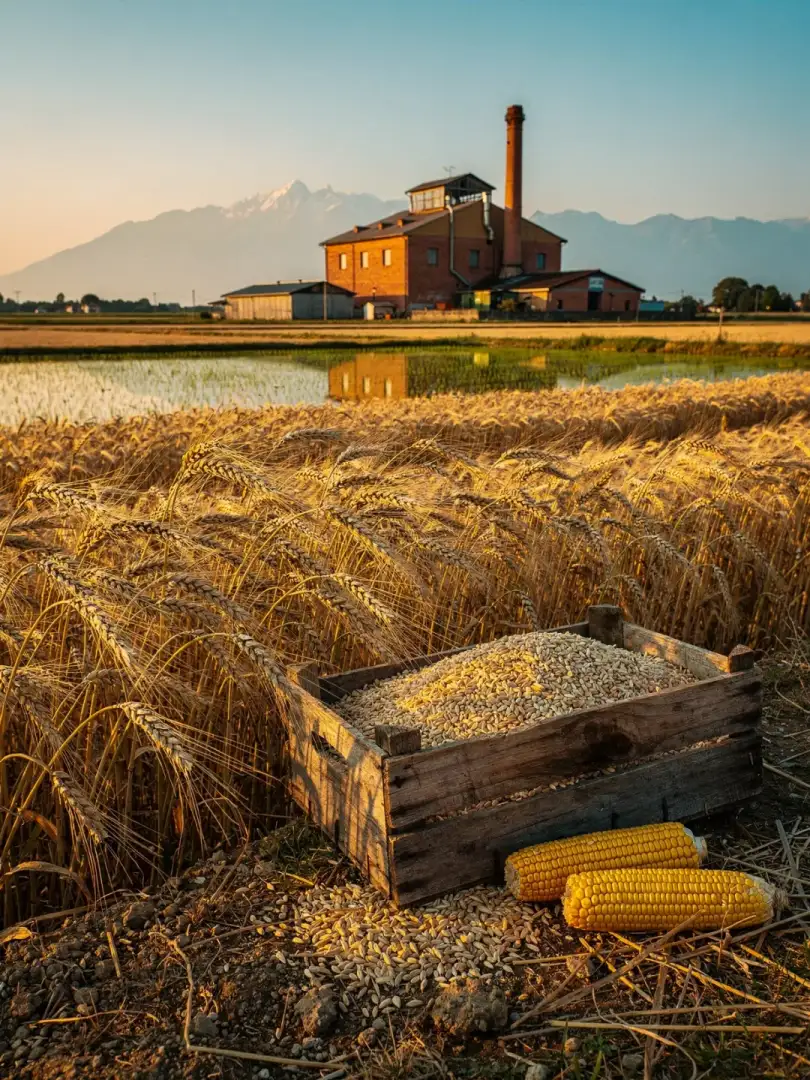
Barley, Corn, Rice
Malt & Grain
Barley is the foundation of almost every beer, Piedmont's included. To make it usable, it's briefly germinated at the malthouse and then dried in the kiln, a heated drying chamber. The result is called malt. The longer and hotter the kiln runs, the darker and more roasted it becomes.
According to Menabrea, the beer is made from five ingredients: water, barley, hops, yeast, and brewing corn. Brewing corn, ground maize, adds starch but almost no flavor of its own, which is why the beer comes across as light, pale, and dry. Corn is at home elsewhere in northern Italy too: polenta, a porridge of ground corn, appears on tables across much of Piedmont.
The Po Valley around Vercelli and Novara is a center of Italian rice growing. Rice is allowed to partly replace malt in beer, making it even leaner. How many Piedmontese brewers actually use it isn't documented, but the connection shows just how close field and brewery lie to one another.
Above all, though, it's the grape that gives Italian Grape Ale its character: grape must, meaning freshly pressed juice before fermentation, brings sugar and with it a dose of fermentable material that malt alone would otherwise supply. Which grape variety goes in determines the aroma — Barbera, Nebbiolo, Dolcetto, or Moscato, for instance. Around Alba, in the Roero and in Monferrato, winegrowers supply these varieties, and some brewers source the must directly from there. The result is a grain-based beer with a sense of origin in the glass, carrying a piece of the vineyard within it without losing its character as beer.