Lager, Stout, Experiment
Beer Styles
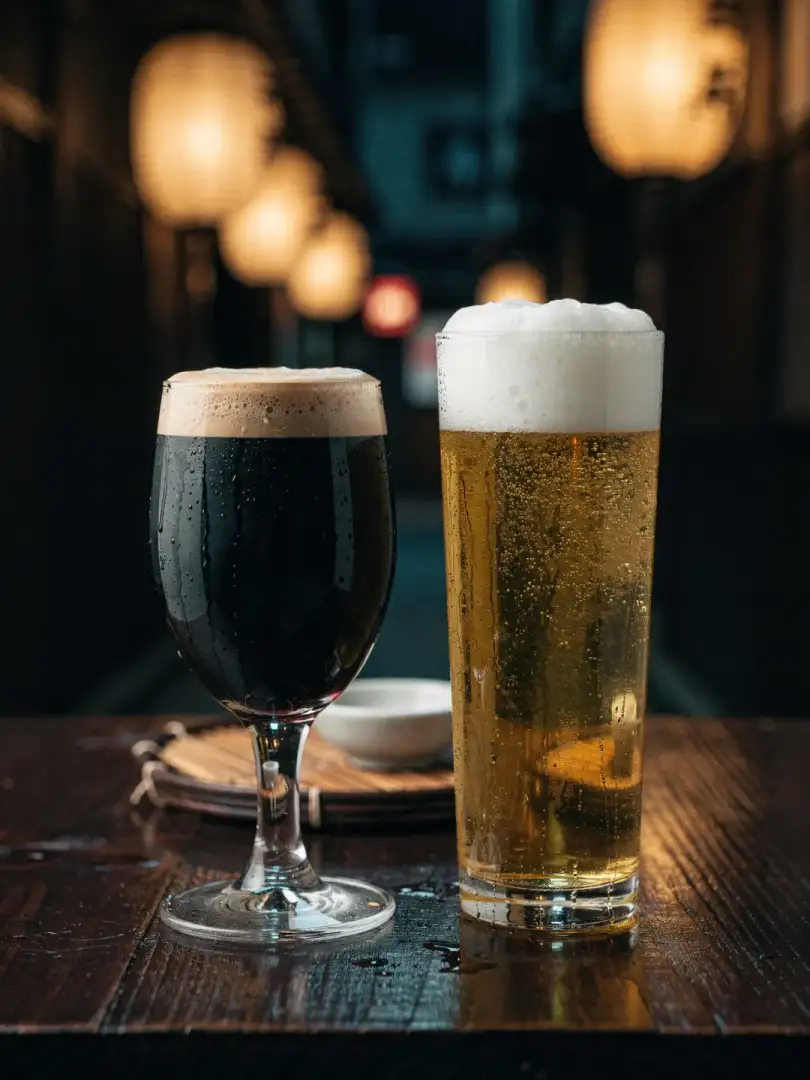
What is a Japanese lager? The BJCP competition guidelines classify it under international pale lager. It's golden, crisp, and dry, with few hops and sometimes a portion of rice or corn. This family includes the beers that are typically the first order at Japanese bars. The major brands from Osaka and Tokyo belong to this category too, and their flavor is deliberately understated so it pairs well with food.
The region's craft brewers go further. Minoh Beer, by its own account, offers a Pilsner, a Stout, and the peach beer Momo, with momo being the Japanese word for peach. Kyoto Brewing's range spans from Belgian-style ales to IPAs to strong dark beers.
Stout originally just meant "strong." Today the name refers to a black, top-fermented beer with roasted aromas, closely related to porter. The difference: stout is usually drier and more intensely roasted. Sake, by contrast, has no styles as such, only quality grades based on the rice's polishing ratio—that is, how much of the grain's outer layer has been milled away.
All of these beer families are young by the standards of winemaking in Kansai. Beer is an imported beverage here, brewed for only about a hundred and fifty years, and the craft scene has existed for barely thirty. There's no convention and no quality seal tying a style to a particular place. That allows for freedom, but it also requires drinkers to pay close attention to labels and descriptions.
International Pale Lagerbottom-fermented
- Original gravity
- 10.5–12.4 °P
- Alcohol
- 4.5–6 % vol
- Bitterness
- 18–25 IBU
- Colour
- 4–12 EBC
Pale gold, crisp and dry, lightly hopped, clean finish.