Lightly Hopped, Dry
Hops
No hops grow in Tokyo. The cones that shape the character of Japanese lager come from the north of the country or from abroad, and the bitterness stays deliberately restrained. The capital's major beers are meant to taste fresh and smooth, not sharp, since they accompany a long meal and shouldn't tire the palate.
Hops deliver two things: bittering compounds, measured in IBU, and aromatic oils that smell of blossom, grass, or citrus. A classic standard lager uses hops mainly for bitterness and keeps the aroma in the background. That's why anyone tasting an Asahi Super Dry for the first time notices coolness and carbonation first, and only afterward a light touch of hops.
Here, many people confuse "dry" with "bitter." Karakuchi literally means "sharp mouth" and in Japan describes anything that isn't sweet, from sake to curry. A karakuchi beer has little residual sugar and a clean, short finish. The bitterness stays low, and the dry impression actually comes from fermentation—the subject of the next station.
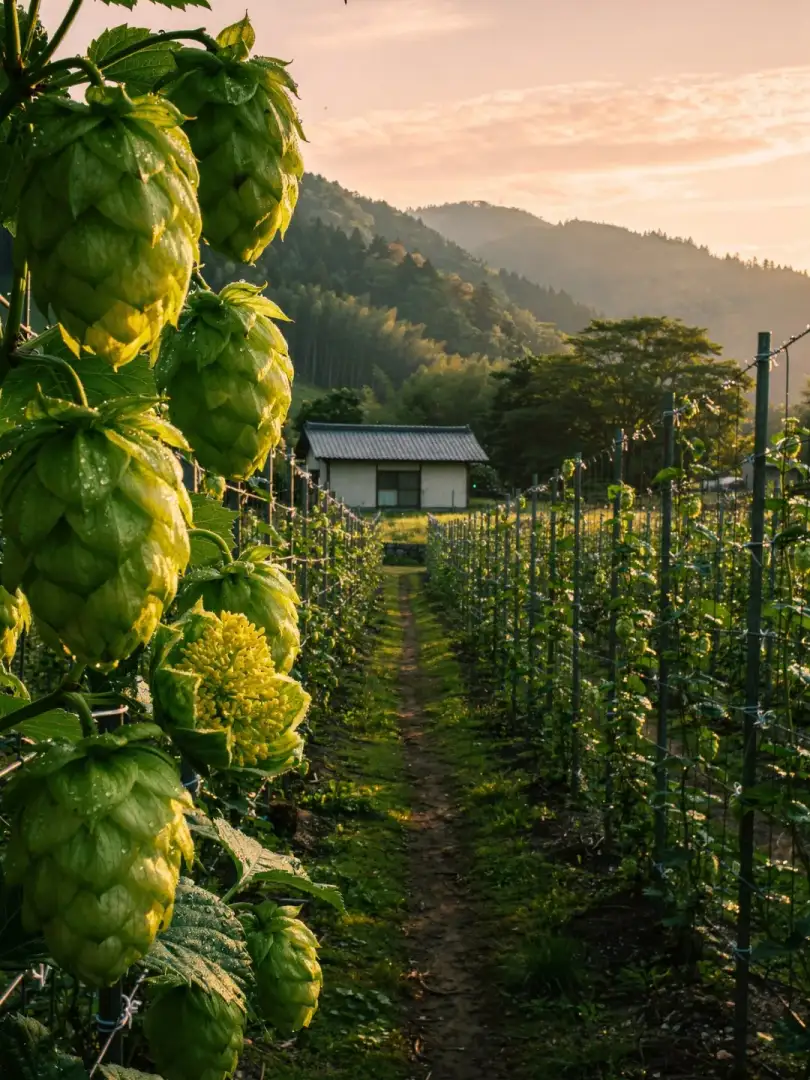
Kirin has maintained its own hop fields in Tōno, Iwate Prefecture, for decades. The neighboring region of Hokkaidō covers northern hop cultivation in detail, so we'll leave that thread there.
With the craft wave starting in the 1990s, hops arrived in Tokyo as a leading character in their own right. In the bars of Shibuya and Ebisu, small breweries now pour IPAs and pale ales that taste completely different from standard lager: resinous, fruity, more bitter.