Cold, Long, Fully Fermented
Yeast & Fermentation
Japan's standard beer is a lager—bottom-fermented. The yeast works at low temperature at the bottom of the tank and settles out after fermentation. Copeland brought this brewing method from Bavaria, and in the tunnels of Yamate it matured slowly in the cool rock.
What makes a beer dry? When yeast converts as much sugar as possible into alcohol and carbon dioxide, little sweetness remains. Experts call this highly attenuated. According to Asahi, Super Dry relied in 1987 on a yeast strain that breaks down sugar especially thoroughly, combined with a long fermentation. The result was a beer the Japanese called "karakuchi," and that word became the selling point.
The ingredients help too, since rice and corn provide fermentable sugar but less protein and body than pure barley. This makes the beer come out clearer and leaner. A Japanese lager therefore tastes less of malt sweetness than a Bavarian Helles.
That leaves the question of the word "nama." It means raw or fresh. For Japanese beer, it means draft beer without heat treatment: instead of pasteurizing it, the yeast and microbes are filtered out. This keeps the beer fresher, and every izakaya menu marks it with the abbreviation "nama."
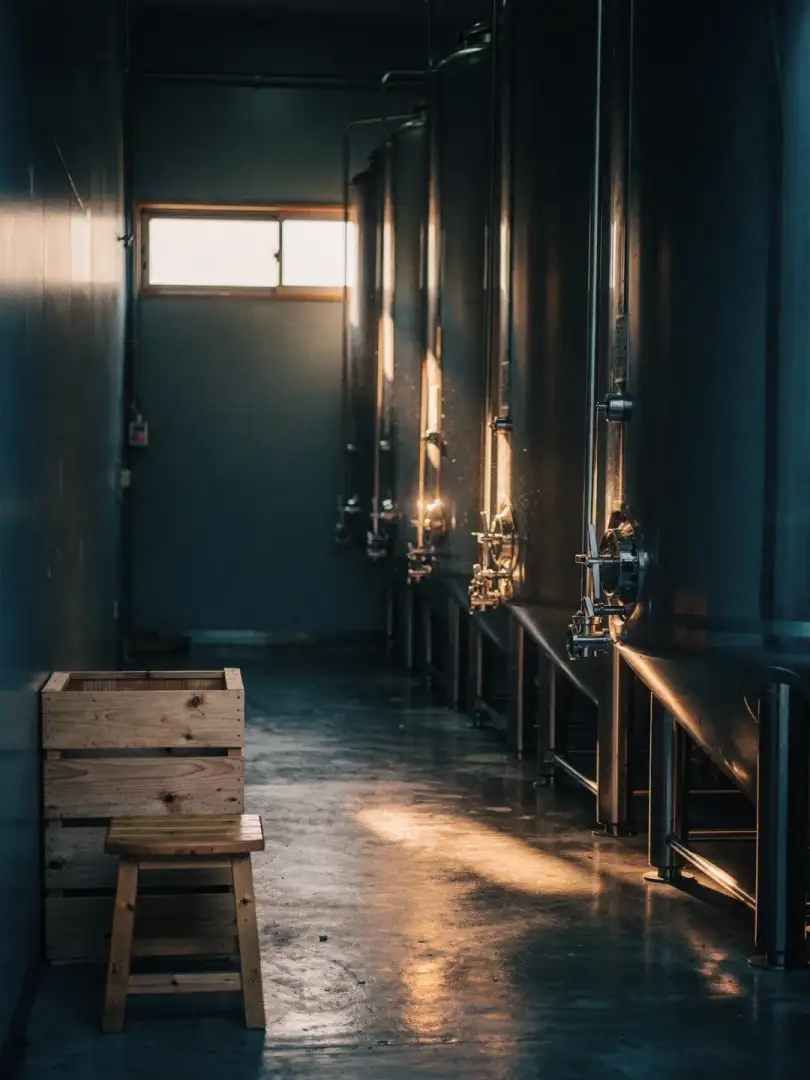
After that, the beer is conditioned briefly and cold—for Tokyo's standard lager, that typically means weeks, not months. Large breweries work in sealed stainless steel tanks, while small craft breweries also use ale yeasts and open fermentation. Both exist side by side in the city.