Yeast from Grandfather
Yeast & Fermentation
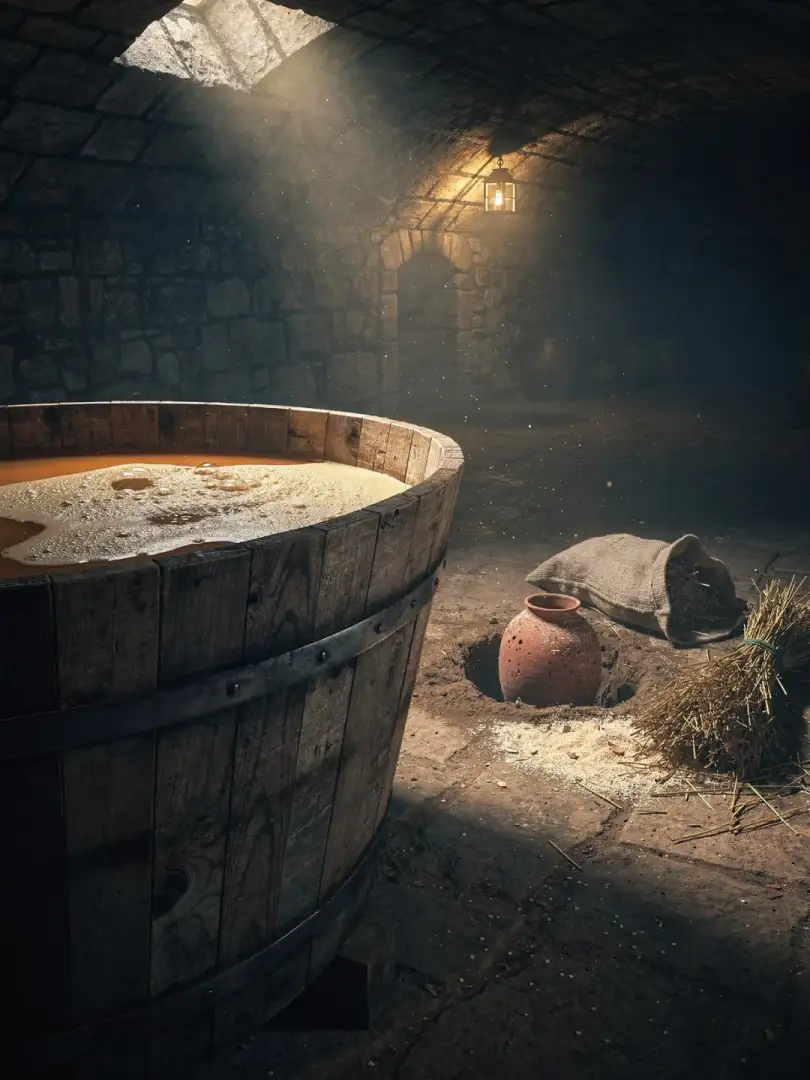
In Jovarai's farmhouse beer, it's the yeast that matters, not the hops. Aldona Udrienė herself says the flavor comes mainly from it. She inherited the strain from her grandfather; its exact origin is unknown. According to the application, it has been passed down within the family for more than 130 years.
Fermentation begins warm. Garshol noted that the cooled wort is inoculated at around 29 degrees Celsius, with the temperature then rising another two to three degrees. That's unusually warm for a top-fermenting beer and explains the fruity and herbal aromas. Top-fermenting means the yeast gathers at the top of the vessel and works best in warmth, unlike lager yeast.
Because the beer is never boiled, it retains its protein. It stays unfiltered and unpasteurized, and carbonation develops naturally in the bottle or cask. Carbonation levels are low, fitting the overall impression of a soft farmhouse beer.
How is such a strain preserved? Garshol reports that Udrienė dries reserve yeast, for example by the fireplace, and that a new culture can be grown from a bottle of the living beer. The US yeast producer Omega Yeast now even offers a strain called 'Jovaru,' developed in collaboration with the brewer.
A long aging period in the cellar isn't part of the process. According to Garshol, most of the beer from Jovarai goes to Vilnius and other cities, with the yeast continuing to live on in the bottle.