Hop Tea Instead of Boiling
Hops
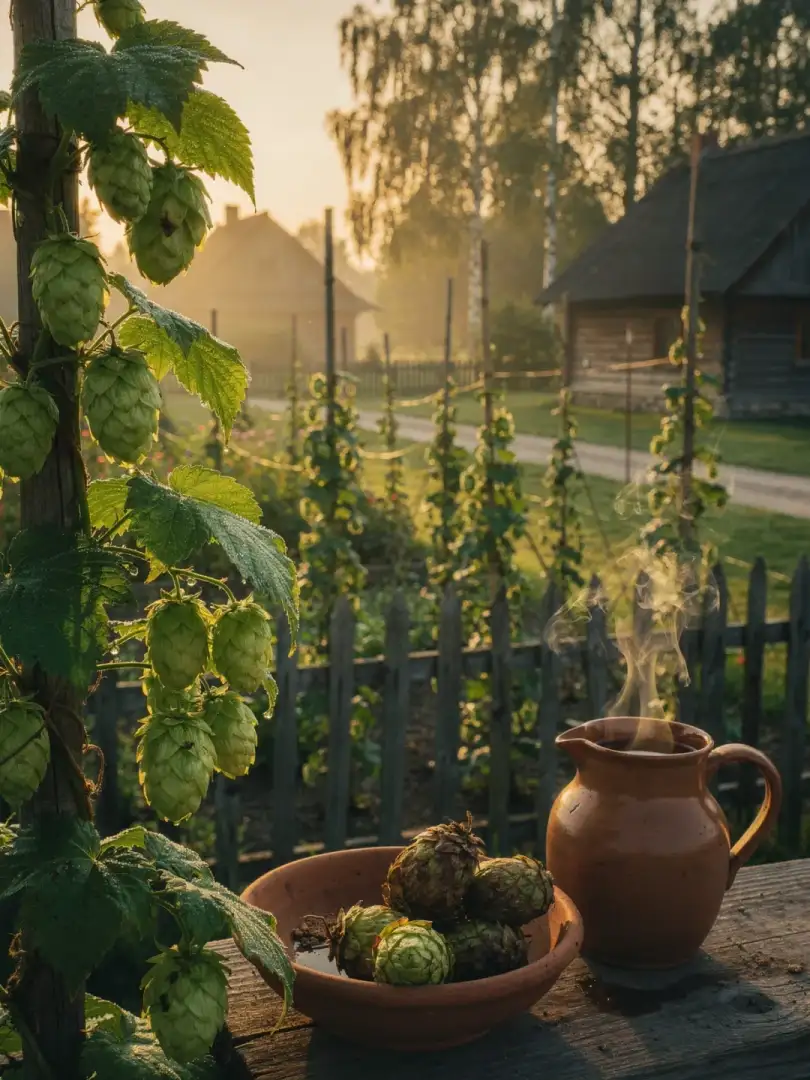
If you don't boil the beer, you can't boil the hops with it either. So brewers make tea instead: they steep hops in hot water and add the infusion to the wort. According to Garshol, this hop tea is added after lautering in Jovarai. Brewer Aldona Udrienė, per his description, uses imported hops for this.
Why this matters: the bittering compounds in hops, the alpha acids, mainly convert and transfer into the beer during boiling. An infusion barely extracts them. In exchange, more of the aroma remains. How bitter a farmhouse beer ends up is determined by the brewer through the amount of tea added to the mash tun, adjustable to taste.
As a result, hops never dominate in Kaimiškas. Travelers describe the region's beers as soft, lightly sweet, and malt-forward, with hops staying in the background. This sets them apart from many craft beers, where hops take center stage.
Unlike some other farmhouse beer traditions around the Baltic Sea, Lithuanian farmhouse brewers generally don't use juniper, favoring a bit more hops instead. Juniper branches were once part of the ingredient list for many farmhouse beers, but in the area around Biržai and Pasvalys, today's brewers rely mainly on hops and yeast.
How much hops go into a particular Kaimiškas depends on the farm. There's no style standard, no IBU range—only the taste of the family that keeps the recipe. Anyone trying a beer from Jovarai will therefore taste yeast and malt first, followed by a gentle, herbal bitterness.