Unboiled, slightly sweet
Malt & Grain
In Jovarai, something every other brewery has is missing: the wort kettle. After mashing, Aldona Udrienė doesn't boil her beer but lets the wort—the sugar solution made from malt and water—cool directly after lautering. This is known as a 'raw beer,' or raw ale in English. The malt is heated only once, during mashing.
This has consequences for the beer's body. During boiling, some proteins coagulate and drop out. Without boiling, they remain in the beer, giving it fullness. That's why a Kaimiškas tastes slightly sweet, even though it's by no means sweet: measurements by Norwegian beer researcher Lars Garshol on a beer from Jovarai showed a final gravity of just 1.002 to 1.005, meaning the beer was almost fully fermented.
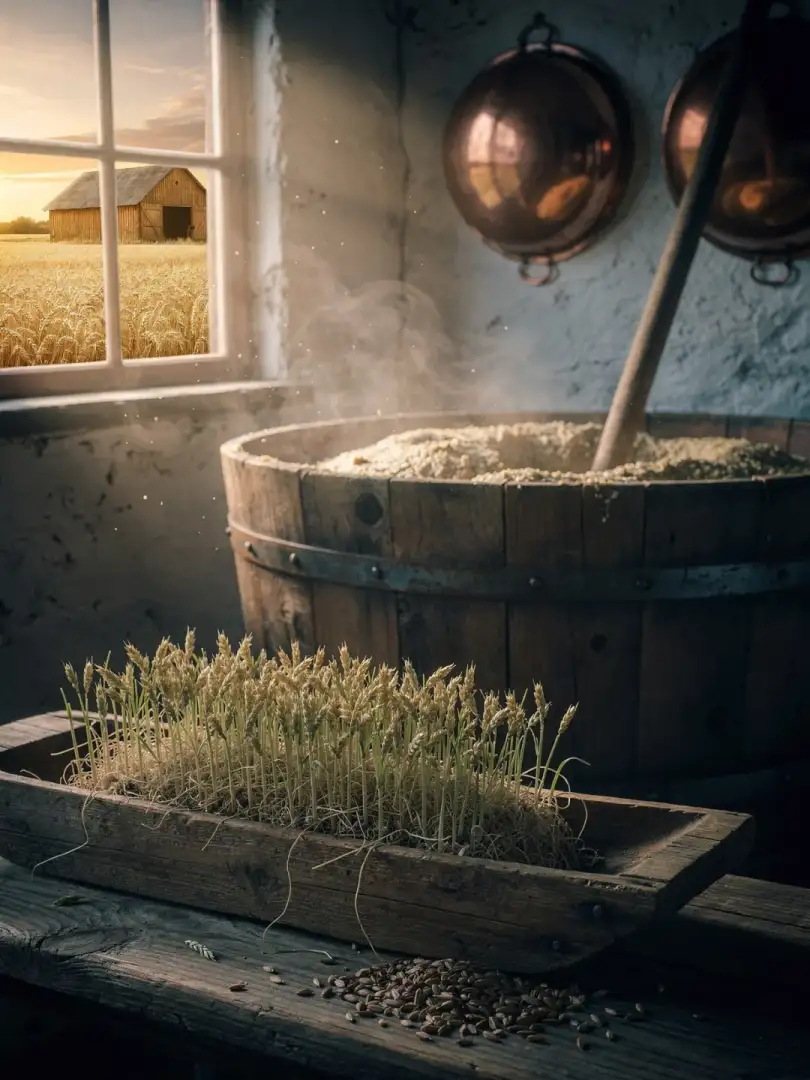
Barley malt usually serves as the base; in Udrienė's case, according to Garshol's description, it's a blend of Czech and Lithuanian malt. On the farms, rye, oats, and wheat were traditionally used as well, either malted or raw, depending on what the farm produced. Malting means soaking and letting the grain germinate so it can form sugar, then drying it.
The malt shapes the color. Kaimiškas is amber-colored and smells of bread, caramel, and fruit, according to the PGI product description. Roasted or smoky notes are not part of the profile, at least as far as can be said for Kaimiškas Jovarų alus.
Because boiling, filtering, and pasteurizing are absent, the malt shares the stage with the yeast. Together, the two define the flavor.