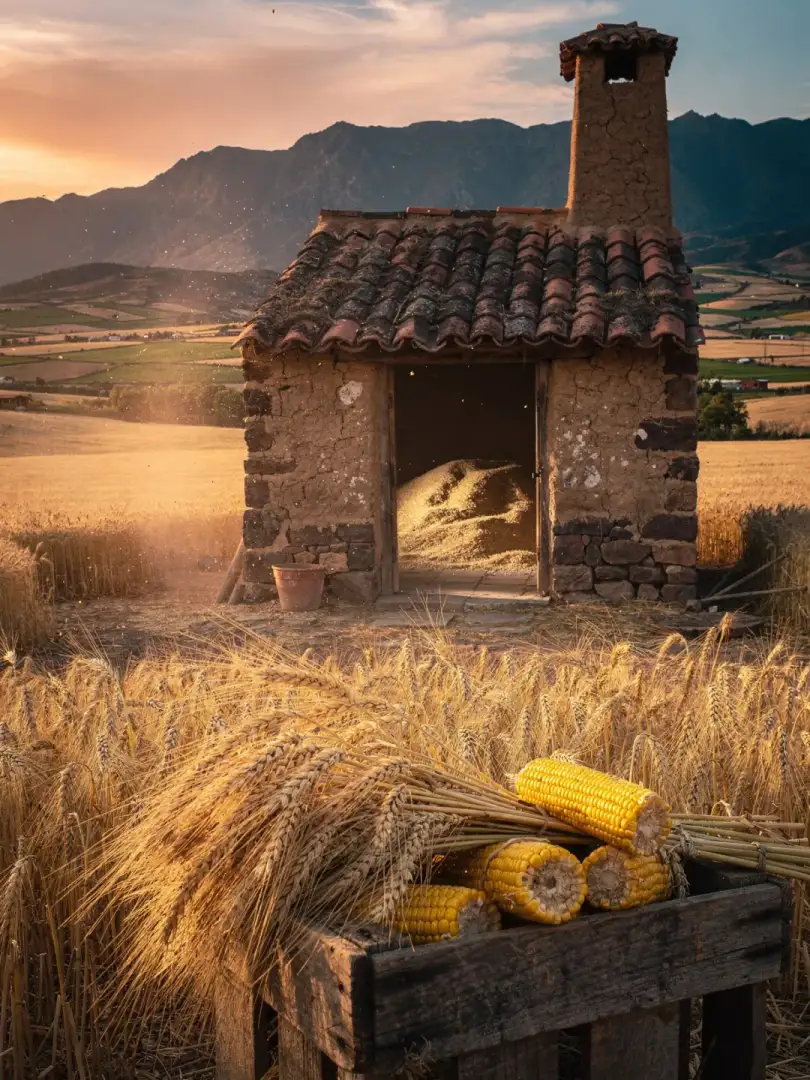
Barley, Corn, Caramel
Malt & Grain
What makes a Mexican lager so light? Alongside barley malt, brewers of such beers often use a portion of corn or rice. The style guidelines for International Pale Lager, the category Mexican Lager falls under, explicitly allow these additions. Corn and rice contribute starch but almost no flavor of their own, making the beer leaner and paler.
Barley malt is made by soaking barley, letting it germinate, and then drying the grain. This drying process is called kilning. The longer and hotter the barley sits in the kiln, the darker and sweeter the malt becomes. Pale beers get pale malt, dark beers get more heavily kilned malt with bread and caramel notes. The darker the malt, the less of the pure grain flavor remains.
One example is Negra Modelo, the dark beer from the makers of Corona and Modelo Especial. The producer describes notes of dark malt and caramel. The beer is brewed bottom-fermented, like a lager, but with a malt bill reminiscent of a Munich Dunkel. Even so, the body stays light, and the beer holds at around five percent alcohol.
The interplay matters here: the malt content determines body and color, while the added grains determine the lightness so welcome on a hot day.
Germany's Reinheitsgebot (Purity Law) doesn't apply here. Brewing beer with corn in Mexico breaks no rules, and the word lager therefore means something different than it does in a Bavarian beer cellar. There, only barley malt, hops, yeast and water would go into the brew, here it's allowed to be lighter and leaner.