Bitterness Without a Hop Garden
Hops
Does hops grow in Namibia? Hop gardens with their tall trellises don't exist here, since the plant needs cool winters and plenty of water. Anyone brewing beer in Windhoek must import hops, as most brewers south of the equator do.
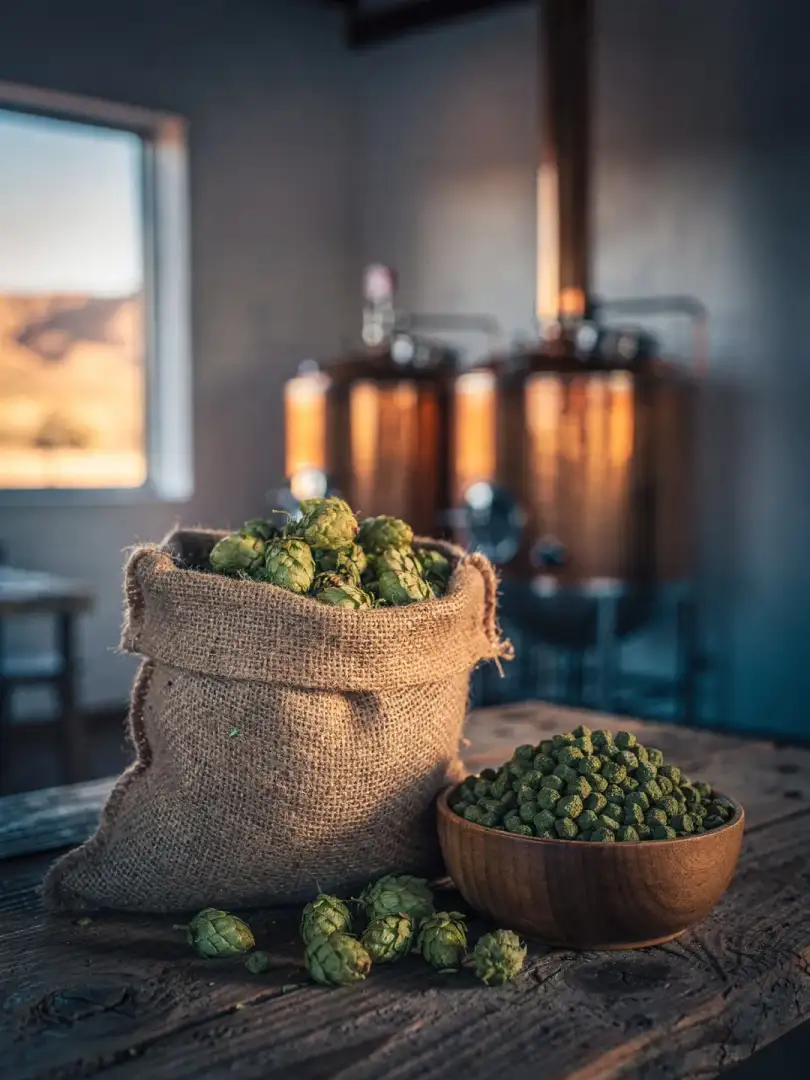
Hops are the cone-shaped flowers of a climbing plant. They contain resins that provide bitterness and essential oils that lend aromas of flowers, grass, or citrus. Both are extracted at different stages into the wort — the sugary liquid before fermentation. Boiled early, hops mainly contribute bitterness; added late, they preserve more aroma.
In lagers like Windhoek Lager, bitterness serves the purpose of thirst-quenching refreshment. It's meant to balance the malt's sweetness, not dominate it. This sets the beer apart from strongly hopped pilsners in the North German tradition — as suggested by the Hansa Pilsner line — and even more so from modern IPAs.
Namibia Breweries doesn't always disclose which hop varieties it uses for its brands. What's certain is the underlying principle, true for Windhoek as for any brewery worldwide: hops arrive dried or as pellets, which keep longer and allow for precise dosing. This is a particular advantage for a country with long transport distances, since fresh hop cones would spoil along the way. Pellets are compressed hop powder that dissolves quickly in the wort and takes up less storage space than whole cones.