Cool Fermentation, Tank Conditioning
Yeast & Fermentation
Is Windhoek Lager top- or bottom-fermented? It's a lager, meaning bottom-fermented. The yeast works at low temperatures and eventually settles at the bottom of the tank. The lager yeast Saccharomyces pastorianus is, incidentally, a hybrid of two yeast species that brewers have used for centuries without even knowing it.
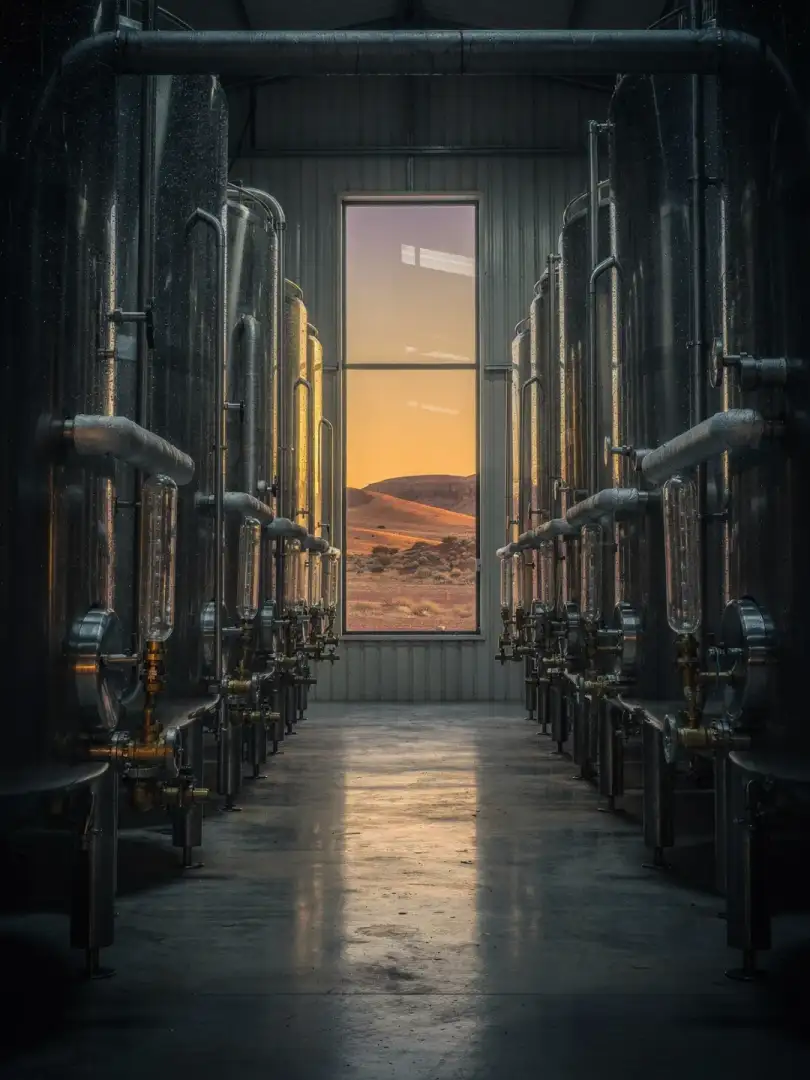
In a hot country, this presents a technical challenge. Lager yeast thrives at around 8 to 12 degrees Celsius, while Windhoek's summer temperatures run far higher. The brewery therefore actively cools its fermentation tanks. Without this cooling, the yeast would produce too many fruity byproducts, the kind typically associated with ales.
After primary fermentation comes lagering. The young beer matures at temperatures close to freezing, allowing yeast and protein particles to settle and sulfur notes to dissipate. The term 'lager' comes from the German word for storage cellar, where beer was once kept cool to rest. In Namibia, tanks take over this role rather than caves.
The former Hansa Brewery in Swakopmund, which operated until its closure in October 2005, also brewed lager beer. Tafel Lager is said to trace its origins there. The cool coastal climate once gave the brewery a locational advantage in an era of less advanced cooling technology. Today, refrigeration technology — not location — determines quality. Fermentation for lager typically takes a few days, with maturation lasting weeks afterward, since rushing the process shows up in the glass. British and Belgian ales, by contrast, often ferment faster, at warmer temperatures, and with more pronounced fruit character.