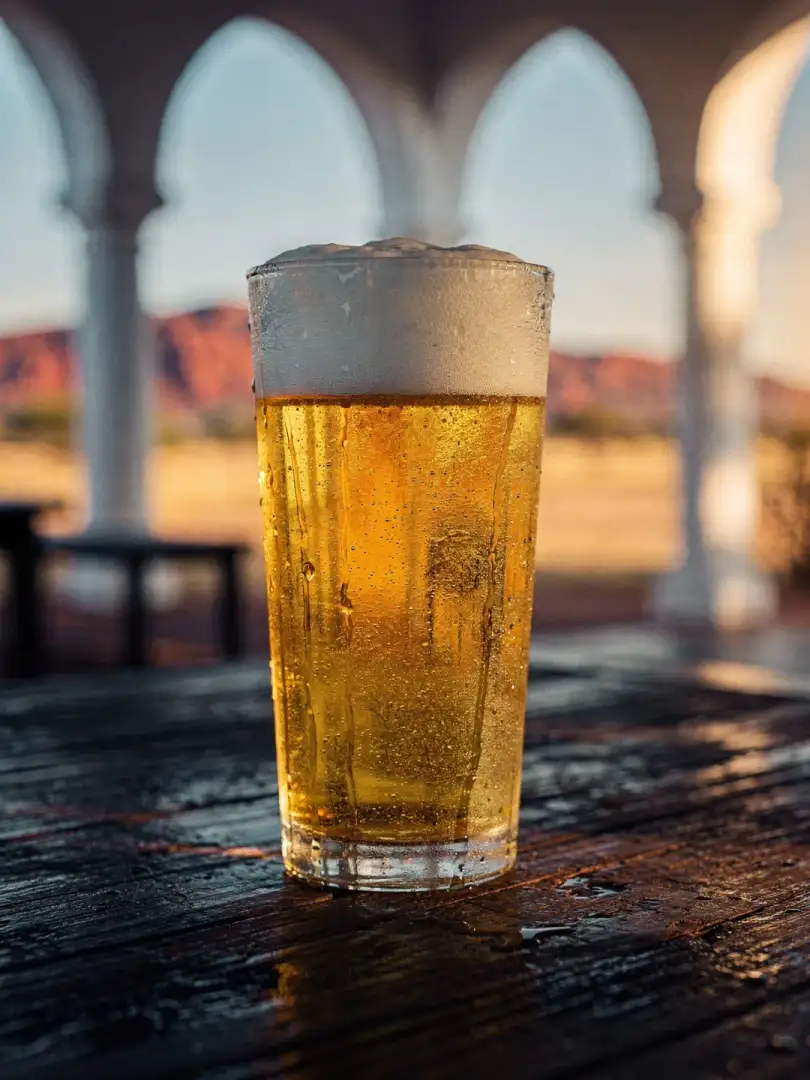
Lager and Pilsner
Beer Styles
Windhoek Lager is a pale, bottom-fermented lager. So what's the difference compared to a pilsner? Both are bottom-fermented and pale in color. But a pilsner is more heavily hopped and drier, while an international lager tends to be milder and softer. By this classification, Windhoek Lager falls into the milder category — the style most widely consumed around the world.
Alongside its flagship lager, Namibia Breweries produces other brands, including Windhoek Draught and Windhoek Light. Tafel Lager, according to tradition, originated at the Hansa Brewery in Swakopmund. A pilsner under the Hansa name remains one of the country's best-known beers to this day.
Both styles share a common foundation: low fruitiness, high clarity, and a clean, lean body that performs best served cold. Windhoek Lager doesn't call for warmth and sunshine — above all, it's meant to taste fresh. This explains why brewers in hot countries favor lager: it's less fruity and tolerates cold far better than an ale does. The style profiles reflect competition ranges set by the BJCP beer judging association, not figures for specific brands. The actual strength of any particular beer is printed on its label. German pilsners often sit closer to 4.8 percent, while pale export lagers from Africa frequently land somewhat below or above that mark.
Namibia's beer doesn't have its own distinct national style, the way Kölsch or Altbier do in Germany. Nor is there any protected designation of origin for Namibian beer, meaning any brewery is free to brew a lager to its own taste. What makes it special lies in its history: German brewing technique, introduced under colonial rule, later carried forward by an independent nation, and today overseen by a Dutch multinational.
International Pale Lagerbottom-fermented
- Original gravity
- 10.5–12.4 °P
- Alcohol
- 4.5–6 % vol
- Bitterness
- 18–25 IBU
- Colour
- 4–12 EBC
Pale, clear, mild malt character, subtle hop aroma, very clean fermentation.