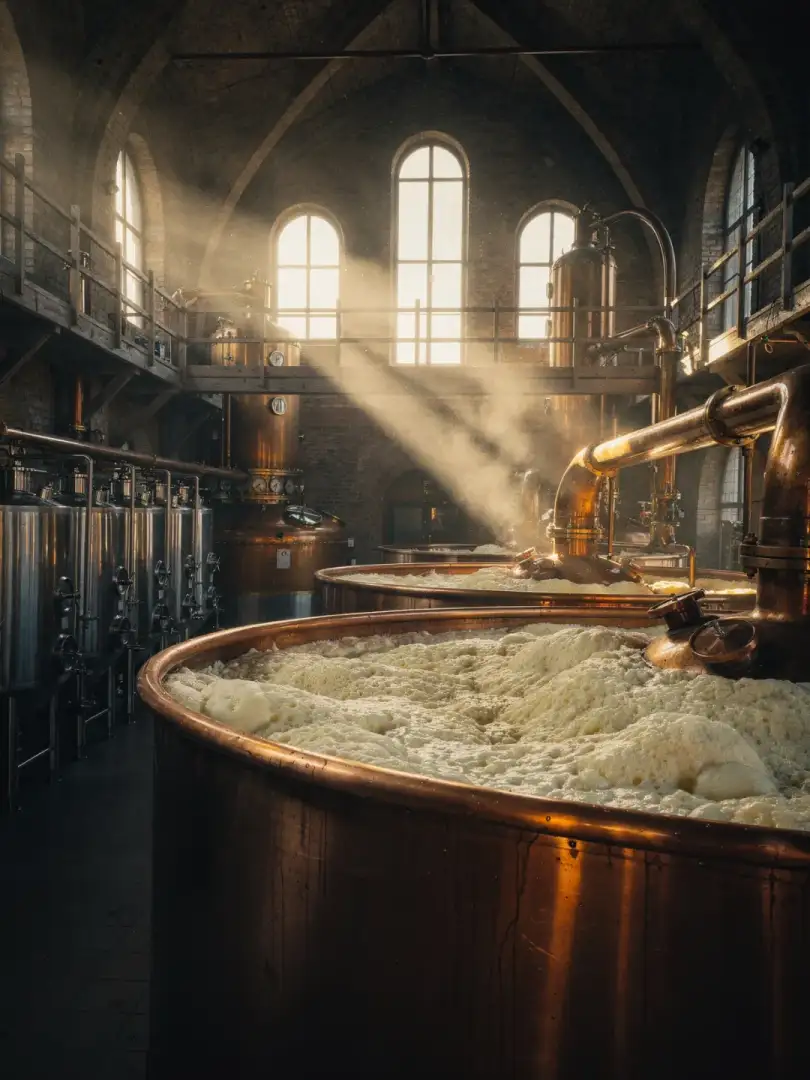
A-Yeast and Bottle Conditioning
Yeast & Fermentation
Why does Heineken taste similar everywhere? Partly thanks to a yeast strain that has been cultivated in-house since 1886. Back then, Dr. H. Elion, a student of Louis Pasteur, developed the "A-yeast" in the Heineken laboratory, which is said to remain the basis of the beer to this day. According to the brewery, it is propagated at the Zoeterwoude plant for other breweries within the group as well.
A pure culture yeast is a single, selected yeast strain that ferments the same way every time. This was groundbreaking at the time and a key reason Pasteur's students were so sought after: beer could suddenly be brewed reliably, without occasionally turning sour. Heineken is a bottom-fermented beer, meaning the yeast works at cool temperatures and settles at the bottom of the tank once fermentation is complete.
After primary fermentation comes lagering. Bottom-fermented beers mature cold for weeks so that off-flavors break down and the taste rounds out. The large facilities in Zoeterwoude do this in stainless steel tanks rather than cellars, since rock cellars simply don't exist in flat Holland.
Amsterdam's small breweries take the other side of the yeast world: top-fermenting yeasts from the Belgian tradition. These ferment warmer and produce fruity, spicy aromas, especially in beers left to referment in the bottle. Yeast remains in the beer, making it cloudier and often giving notes of banana, clove, or pear.
Bokbier goes both ways. Originally bottom-fermented, it is now more often brewed as a top-fermented beer. Among connoisseurs this is a point of debate, but for the yeast it's simple: fermentation management decides whether a Bok comes across as round and malty or fruity and spicy.