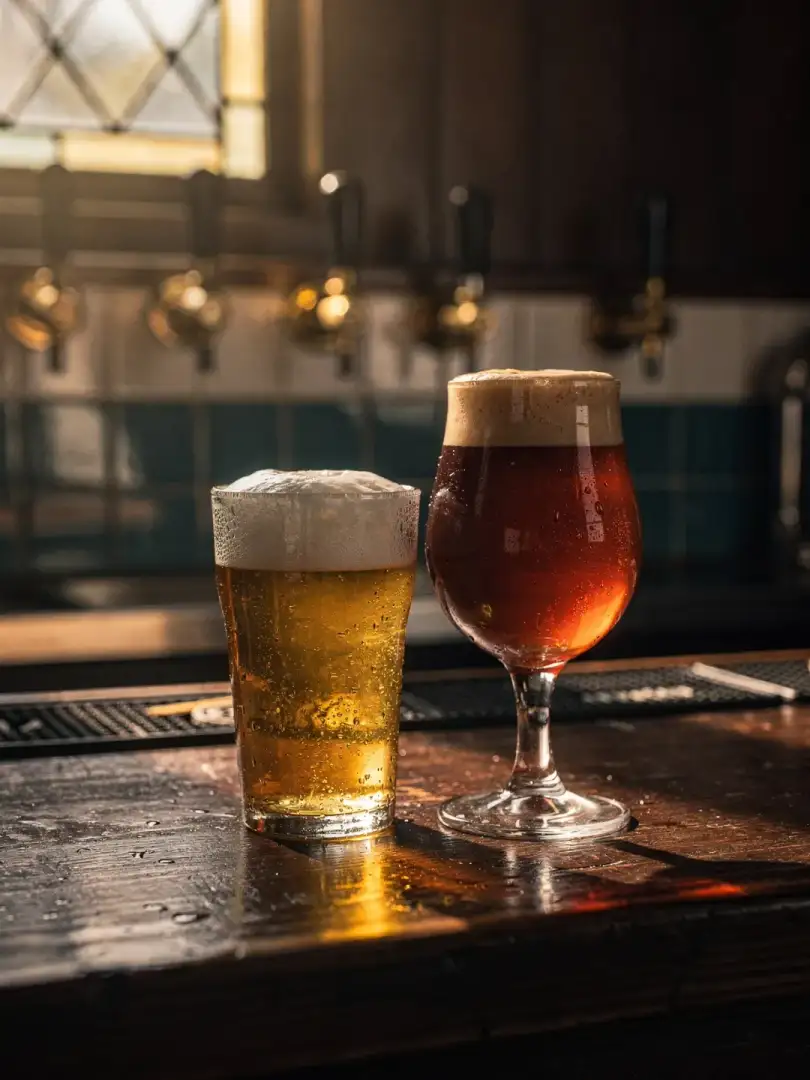
Pils and Bokbier
Beer Styles
What is Dutch Pils? A pale, bottom-fermented lager with mild bitterness, the kind Heineken sells around the world. According to the BJCP competition guidelines, it falls under the International Pale Lager category, not German or Czech Pils, which are notably more bitter. Within the style guidelines, the alcohol content ranges from 4.5 to 6 percent.
The difference from German Pils lies in the hopping rate. A North German Pils can reach up to 40 IBU, while Dutch Pils stays softer and gentler. This isn't a value judgment but a flavor framework: anyone drinking a Pils with a meal or in the sun usually wants little sharpness.
Bokbier is the second defining style. It's a robust autumn beer with pronounced maltiness—formerly bottom-fermented, now often top-fermented. Its numbers vary, and there's no fixed standard for it in the guidelines. Many brewers aim for around seven percent alcohol, with exact figures listed on the label.
Wheat beer and Tripel can also be found in Amsterdam, though they originate from Bavaria and Belgium respectively. Brouwerij 't IJ, for instance, brews the wheat beer IJwit and the Tripel called Zatte, both in the Belgian style. They aren't original Dutch inventions, but they show how the city absorbs foreign styles.
Jenever doesn't belong in a beer glass, but it sits right next to one in many pubs. This juniper spirit is the classic accompaniment to beer. How it's drunk is covered in the section on food and beer culture.
International Pale Lagerbottom-fermented
- Original gravity
- 10.5–12.4 °P
- Alcohol
- 4.5–6 % vol
- Bitterness
- 18–25 IBU
- Colour
- 4–12 EBC
Pale, clear, mildly bitter, lightly malty, robust head.