Pale Malt, Bock Malt
Malt & Grain
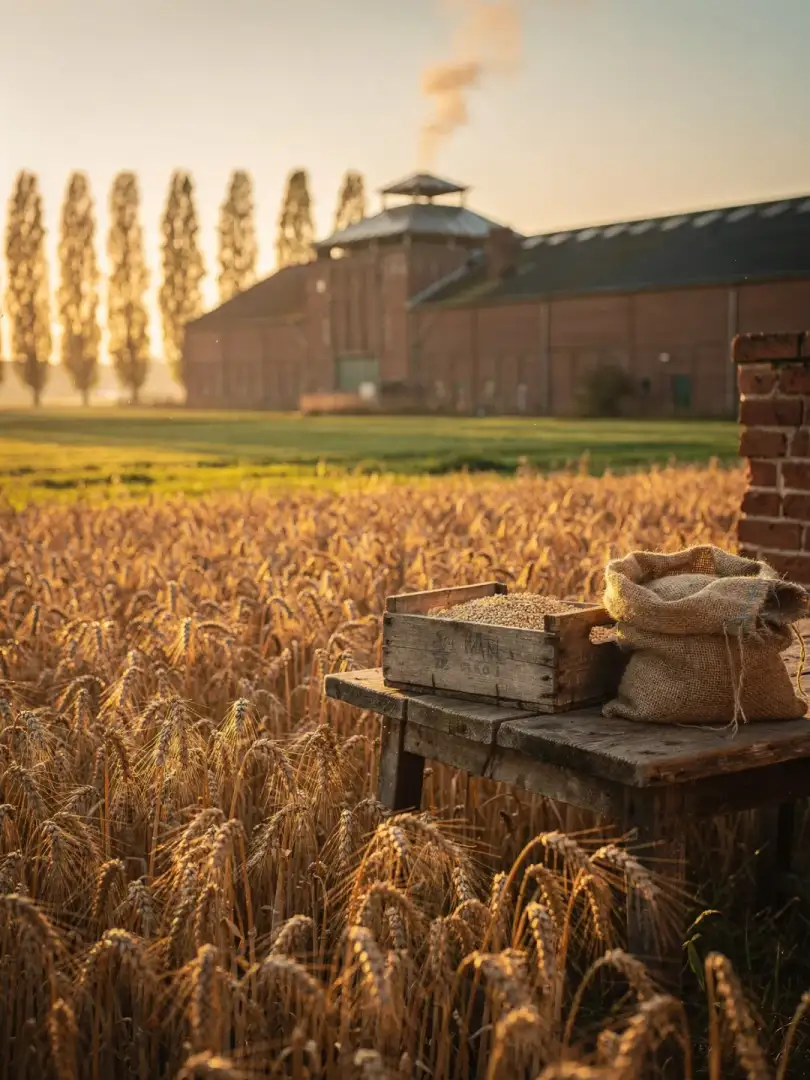
What goes into a Dutch pilsner? Mostly pilsner malt, a pale-kilned barley malt that gives the beer its light color along with notes of fresh bread and crackers. During kilning, the drying of germinated grain in the oven, the temperature stays low so the malt doesn't darken. How much corn or rice goes into any given beer alongside it isn't something every producer discloses.
Holland is a trading nation, and that applies to malt too. The port cities bought grain wherever it was available at the time, and for large breweries like Heineken in Zoeterwoude, malt remains a raw material sourced through supply chains to this day, not something grown on a farm down the road.
Come autumn, dark malt takes center stage. A bock beer thrives on malt richness, which specialist literature on Dutch Bokbier describes as its defining trait: flavors of caramel, bread, and toffee, with hop bitterness fading into the background. That calls for caramel and roasted malts along with a high original gravity, meaning plenty of dissolved sugar in the wort that will later ferment into alcohol.
Small breweries like 't IJ take a different path. They brew top-fermented beers in the Belgian style, where the malt character ranges from pale and dry to sweet and dark. Spices like coriander and orange peel sometimes join the mix in their white beers. The appeal lies in the interplay between malt, spice, and yeast.
The Netherlands has no purity law forcing brewers' hands. Brewers are free to use other grains and additives, which explains why the range runs so wide, from plain pilsner all the way to a robust winter beer.