Bottom, Top, Sour
Yeast & Fermentation
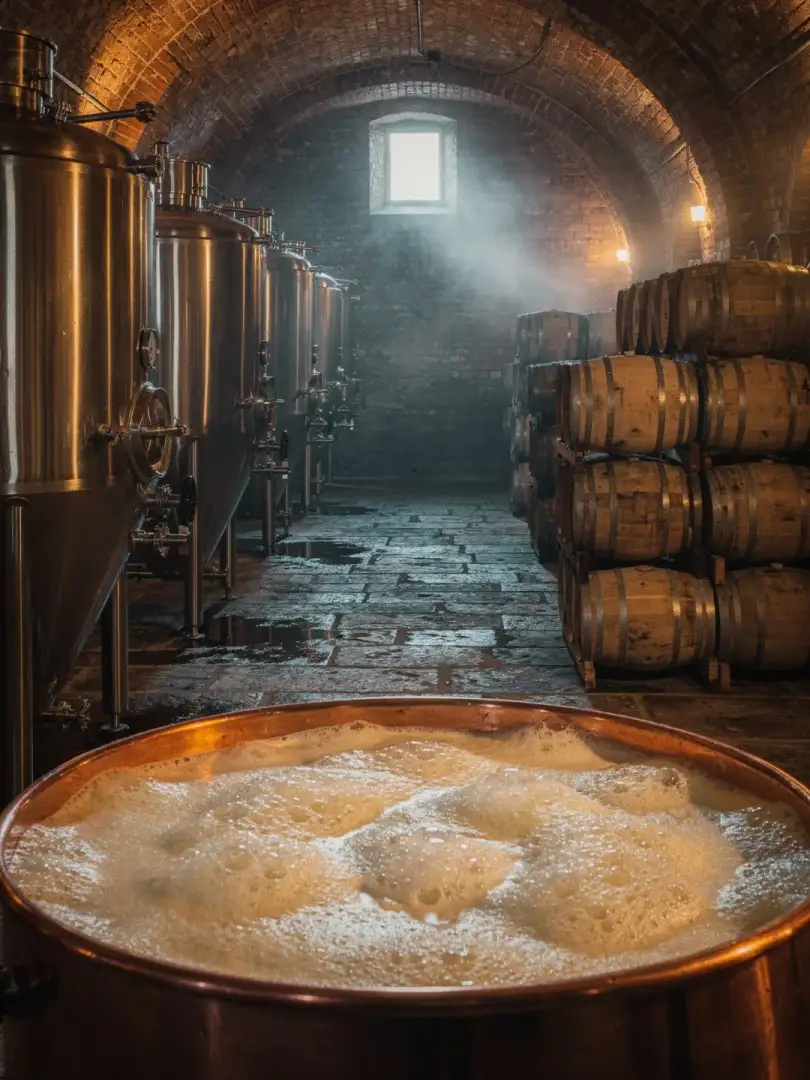
What's the difference between bottom-fermented and top-fermented beer? Bottom-fermenting yeast works at cool temperatures of just a few degrees and then conditions for a long time, producing a clean, clear beer like Pils. Top-fermenting yeast ferments warmer and often produces fruity esters, giving rise to witbier, Dubbel and Tripel.
Limburg has both. Gulpener's first beer from 1826 was top-fermented, while the Pils beers of today's breweries are bottom-fermented. Brand and Alfa likewise brew their Pilsners bottom-fermented, with Alfa reportedly still using the same recipe as the first generation.
Mestreechs Aajt, the old beer of Maastricht, is something special. It's dark, somewhat sour, and low in alcohol at 3.5 percent. The Gulpener brewery produces it under the name "De Zwarte Ruiter." It's considered a remnant from the days when Maastricht brewers sought shelf stability through mild acidity.
According to tradition, such old beers include a mild lactic acid alongside the yeast. That's a very different world from the fruity sourness of a Belgian lambic from the Senne valley, even though the neighborhood with Belgium is close by. Mestreechs Aajt is milder and comes across as a light everyday beer, not an aging experiment.
At the larger breweries, conditioning happens in tanks; Brand states it skips pasteurization entirely. The Dubbel and Tripel of the Gerardus range age longer because higher alcohol needs more time to settle, letting the yeast work through the remaining sugar. The higher the original gravity—the dissolved sugar before fermentation—the more alcohol can develop. A Tripel therefore starts with considerably more original gravity than a Pils and ferments correspondingly longer.