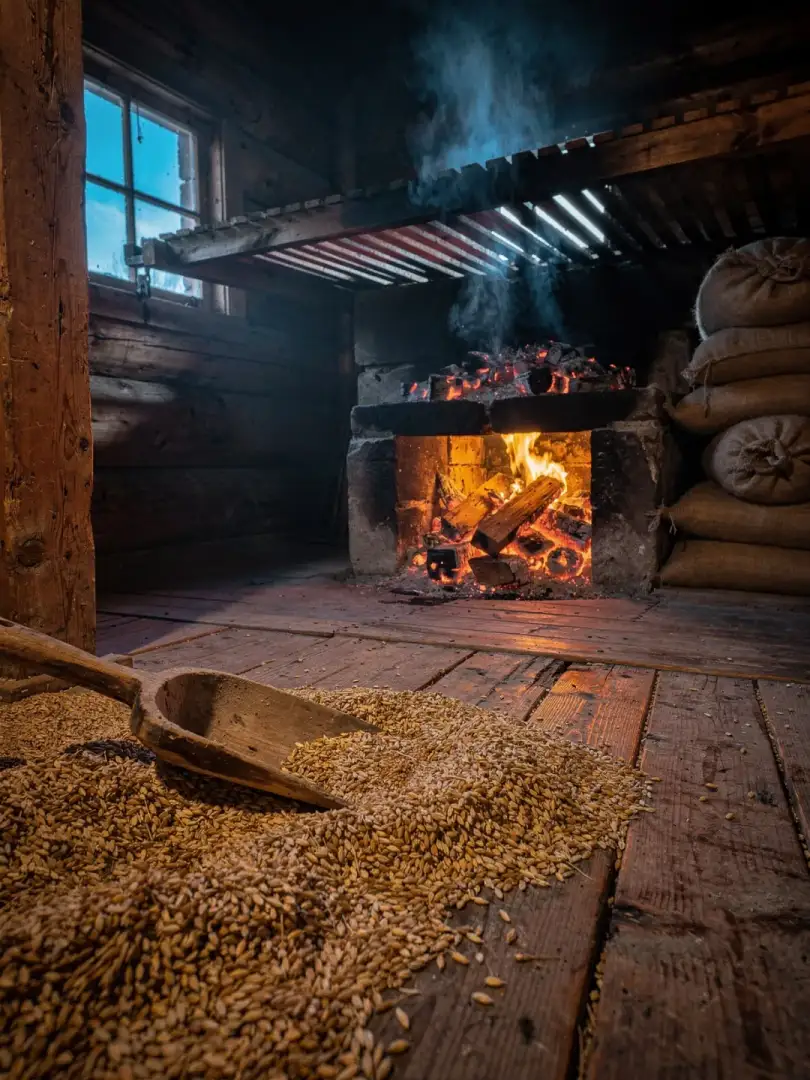
Alder smoke, Såinnhus
Malt & Grain
In late summer, the Stjørdal valley smells of burning alder wood. There, farmers still malt their own barley — in small communal buildings called Såinnhus. The smoked malt from these houses is the foundation of Stjørdalsøl.
Malting means: soak the barley, let it germinate, then halt germination by drying. In the Såinnhus, the barley dries over an open alder-wood fire. The smoke passes through the grain and darkens it, which is why the beer later tastes strongly of wood smoke.
An estimated fifty such malt houses still exist within a twenty-kilometer radius of Stjørdal. It's the last area in Norway where this farmhouse malting tradition survives at such density. Hegra, at the edge of the valley, is also among the places these smoked beers come from.
In Western Norway, in Voss and Hornindal, the malt is usually milder. Here it's typically barley malt with a mild aroma, malted by the farmer himself or bought from a neighbor. Smoke remains the exception there.
With Kornøl — literally "beer from the grain" — the wort isn't boiled. The malt is leached with the hot juniper infusion, the liquid drains off and ferments immediately. Because there's no boiling, a soft, slightly bready malt character is preserved.
Barley is the region's most important grain. Some recipes add a touch of oats or rye, but the bulk of the work is done by barley malt, kilned light or dark, and in Stjørdal, smoked.