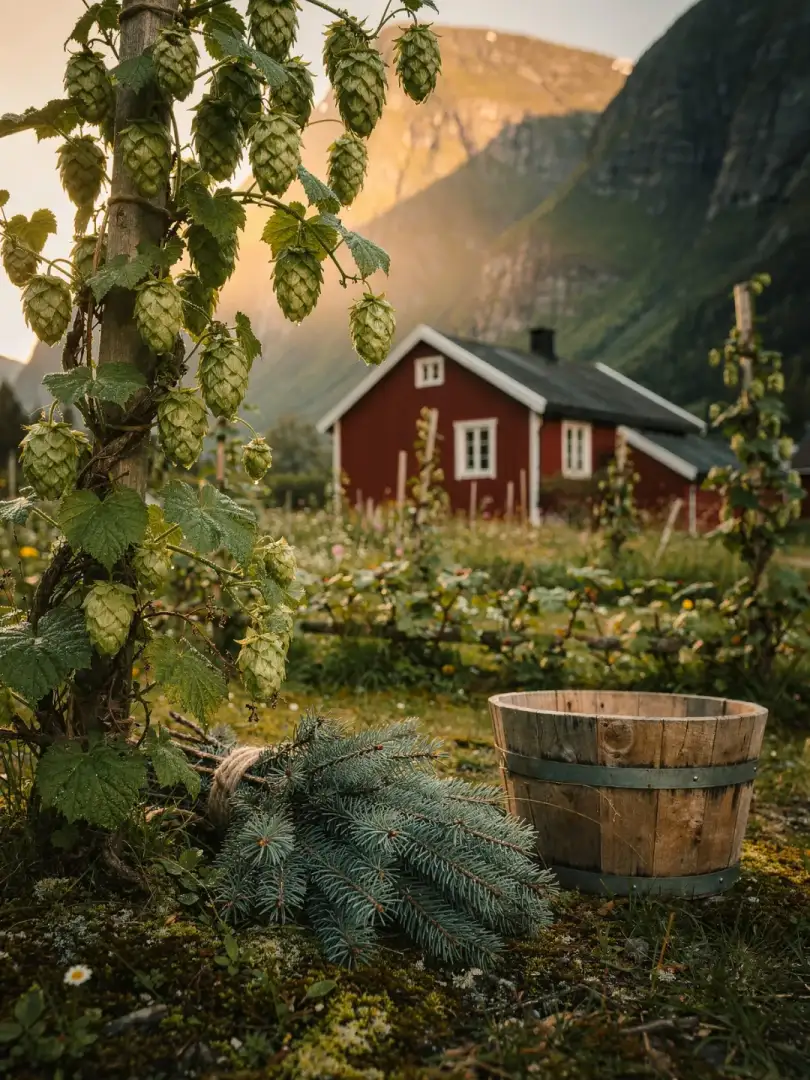
Hops, juniper, branches
Hops
In Norwegian farmhouse beer, hops are just one of two flavoring agents. The other is juniper, and juniper often sets the tone. Taste a Gårdsøl and you'll notice resin and pine needle first, with only a faint hop bitterness following after.
In the old days, hops were grown right on the farm, in a small garden behind the house. These plants supplied the cones for the Christmas beer and helped preserve it a little. Large-scale cultivation never existed.
Hops contain bittering compounds that cut the malt's sweetness and help the beer stay fresh longer. Even so, the bitterness in farmhouse beers from Voss or Hornindal stays low, since brewers wanted something soft and easy-drinking rather than sharp.
Juniper supplies a second layer of flavor instead. It brings resin, a hint of citrus, and some tannin that gives the beer bite. In Stjørdal, the smoke from the malt joins in too, pushing hops almost to the sidelines.
Today the picture looks different. Craft brewers in and around Bergen buy hops from abroad and love pairing Kveik with fruity American varieties like Citra. The warm fermentation then brings out citrus and tropical fruit notes without making the beer sharply bitter.
So if you want to understand a Norwegian farmhouse beer, don't ask about the bitterness. Ask about the juniper, the smoke, and the yeast — because in the end, that's what decides the flavor.