Bitterness and Aroma
Hops
Which varieties go into the big brands isn't stated on the label. How bitter is a Styrian Märzen? Less than a Pils, since Gösser Märzen is considered a mildly spiced, easy-drinking lager.
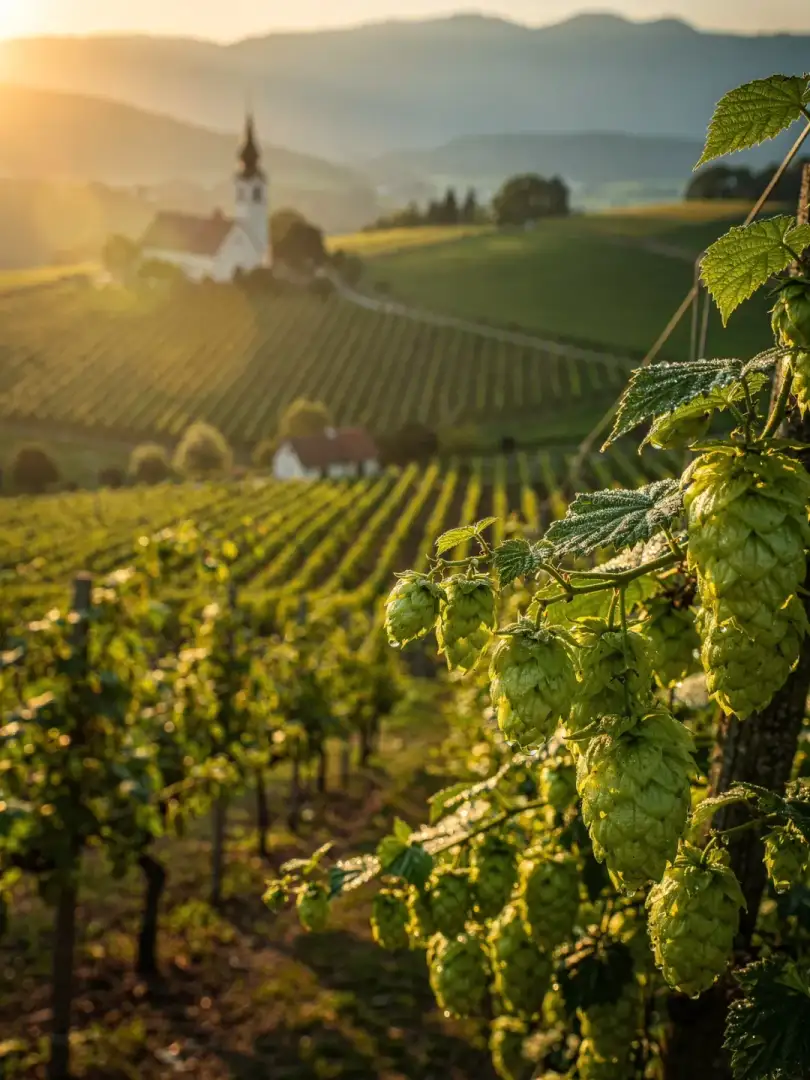
Hops contribute two things during the boil. Added early, they provide bitterness that balances the sweet malt. Added late, they deliver aromas of grass, herbs, or flowers, since the volatile oils don't boil off. A Pils usually gets more of both, a Märzen less, so the malt stays in the foreground.
Anyone who picks up a Hirter Privat Pils can taste this contrast. The brewery states 12.3 degrees original gravity and 5.2% alcohol by volume for it. Original gravity refers to the dissolved sugar in the wort before fermentation—a measure of how robustly a beer is built.
You have to be careful with the term 'Styrian hops.' The protected Štajerski hmelj comes from neighboring Slovenia, which also carries the name Štajerska. It's been registered in the EU as a protected geographical indication since 2017. For a beer from Graz or Villach, it means nothing—here only what the brewery itself states counts.
It's common for lagers not to list a specific hop variety, and that says nothing about quality. What matters is how early and how much hops go into the kettle. Bitterness is measured in IBU, a number for the bitter compounds in beer, and a Pils sits well above a Märzen on that scale.