Barley Becomes Malt
Malt & Grain
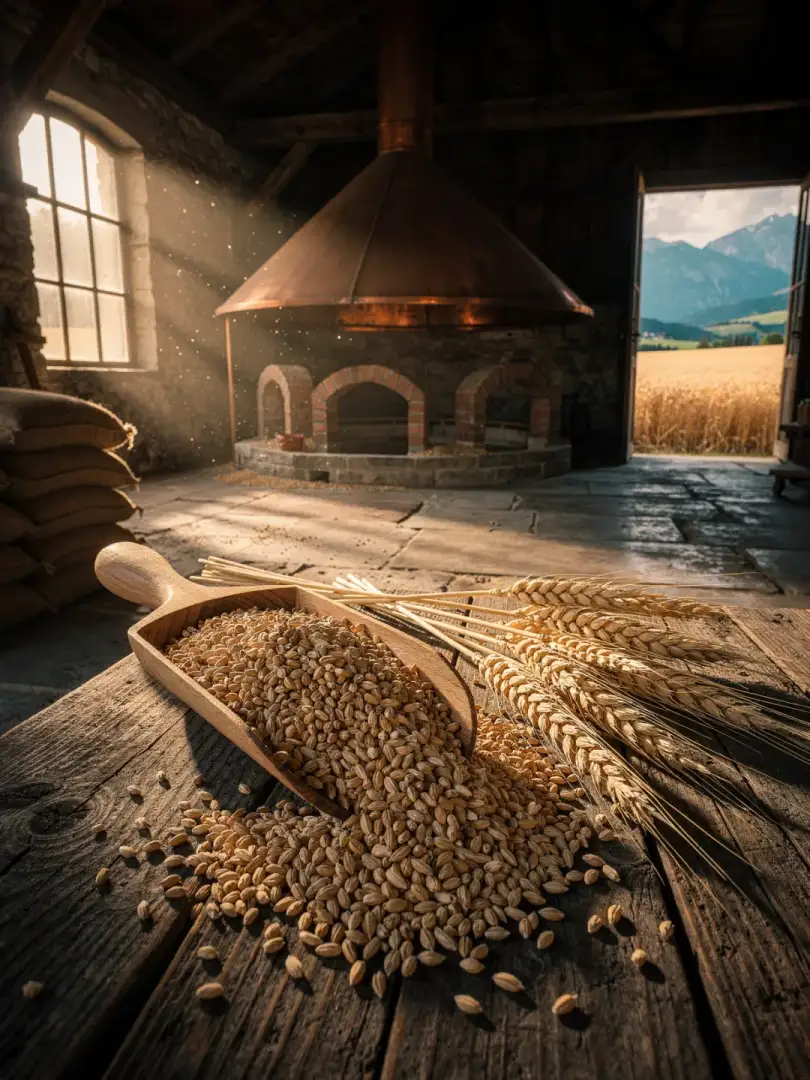
Barley becomes malt, and without malt there'd be no Gösser Märzen. To make it, the grains are soaked in water and allowed to germinate until they develop enzymes that later convert starch into sugar. Germination is then stopped by drying.
This drying process is called kilning, and the temperature determines the color. Gently kilned at low heat, the malt stays pale and tastes of bread and biscuit. At higher heat, it takes on a dark color and roasted notes like caramel. Between these two extremes lie Munich and Vienna malts, which can give a Märzen an amber hue if a brewery chooses.
Pale-kilned Pilsner malt forms the backbone of both Pils and Märzen. Dark malt is needed for a beer like Hirter Morchl, which the brewery classifies as a dark lager. Here the difference between the brands already shows up in the malt bin, before the water even enters the picture. The malthouse is therefore at least as important to a beer's character as the kettle.
Murauer brewery, according to its own statements, relies heavily on regional raw materials and has been CO2-neutral since 2014. Since 1996, it has held the EMAS certification for environmental management, the first Austrian brewery to do so.
A word on Märzen: the name goes back to brewing in March, when a stronger lager was set aside for summer. In Austria, it usually refers to a golden-colored full-strength beer rather than the copper-colored version known from Bavaria.