Inca & Günther
Region & History
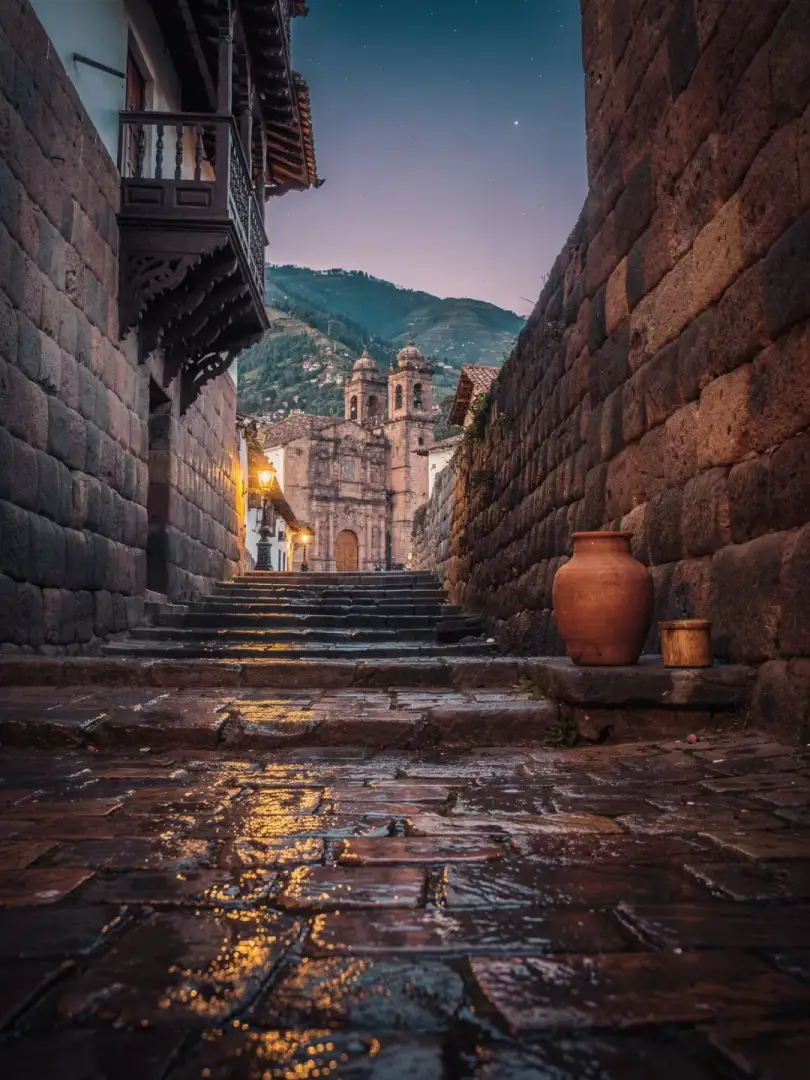
Cusco was the capital of the Inca Empire, and to this day every festival in the city features a drink older than any European beer: chicha de jora. It's made from germinated corn, without hops, and is called aqha in Quechua. Calling it beer only captures part of the truth, since it contains neither barley, nor hops, nor cultured yeast.
According to tradition, the acllas, women chosen for the sun cult, prepared the chicha before Inti Raymi on June 24th. At the festival, the Inca would raise two vessels, offering the first to the sun. Even today, the first sip is often poured onto the ground as a gift to the Pachamama, the earth mother. For many families, this isn't a custom staged for visitors but a living habit.
In 1533 the Spanish occupied Cusco, and the Inca Empire fell. The chicha remained. Families in the city and in the Sacred Valley kept making it and served it in small establishments called chicherías. You can spot a chichería by the long pole beside its open door, often topped with a red flag, flowers, or ribbons.
European-style beer came later. On October 1, 1908, the entrepreneur Ernesto Günther and other investors founded a branch of the German brewery Günther & Tidow in Cusco. The first brew was completed on October 27, 1909. At first they sold a "Pilsener Bier Cuzco" and a malt extract; from the 1950s onward the beer carried the name Cuzqueña, and since the 1970s, Cusqueña.
In 2000 the brewery passed, via Cervesur, into the Backus Group, which belongs to AB InBev. According to Backus, the Cusco facility can produce up to 600,000 hectoliters a year. Alongside it, small craft brewers such as the Cervecería del Valle Sagrado near Urubamba continue the tradition. There is no protected designation of origin or style standard for chicha de jora.