High Valley, 3,400 Meters
Water & Soil
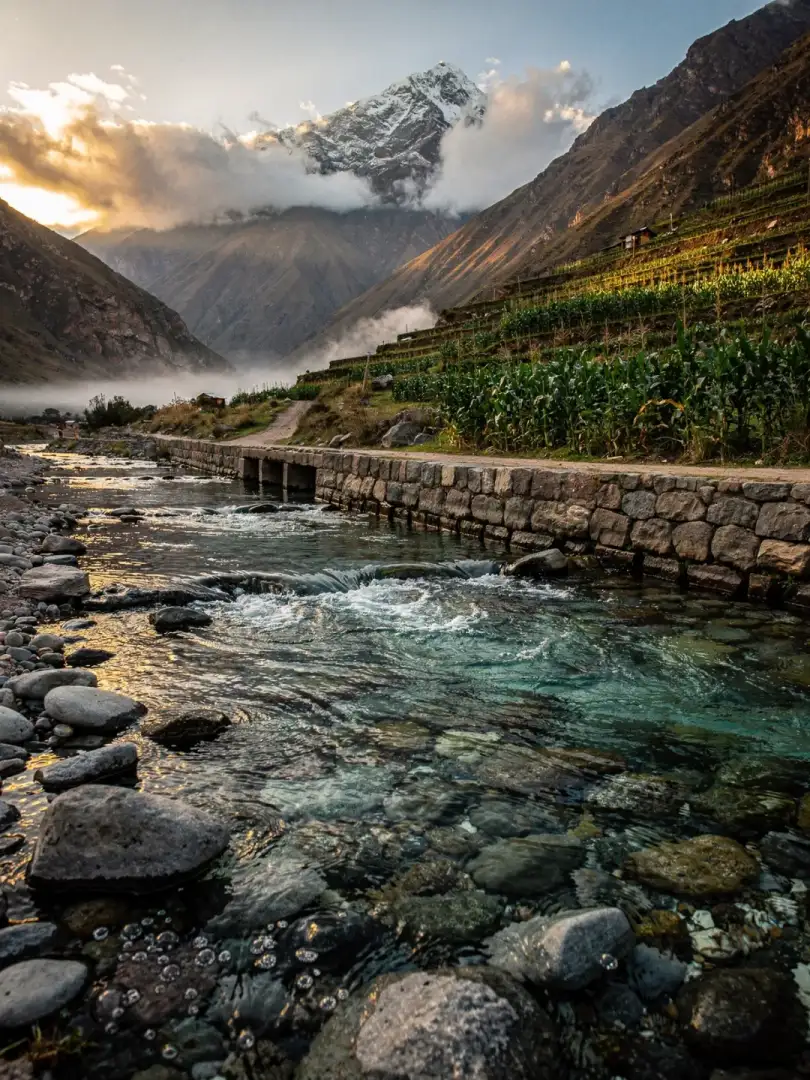
Where does a city at roughly 3,400 meters get its brewing water? Cusco lies in a high Andean valley, fed by springs and streams running down from the surrounding mountains. The Huatanay flows right through the city, and the Urubamba through the Sacred Valley. The Incas built their cities around such watercourses and channeled the water through canals and wells.
For chicha de jora, the ground jora is boiled with water, anywhere from twelve hours to one or two days, depending on the account. Afterward, the liquid is strained through a cloth or sieve. Here, the water draws out the starch and sugar from the corn, staying over the fire for a long time. A brewer in Germany would keep mashing and boiling as separate steps; in the chichería, the two blend into one.
Altitude changes the cooking process. At 3,400 meters, water boils below 90°C, so whatever's cooking there is less hot than at sea level. Brewers in the Sacred Valley report having to adapt their methods accordingly; the Cervecería del Valle Sagrado sits near Urubamba at just under 2,900 meters. The air is dry, the nights are cold, and a beer cellar cools almost on its own.
Soil is the other half of the story. In the Sacred Valley, corn grows on alluvial land by the river and on terraces along the slopes first built by the Incas. The water for the grain comes from the same streams that also supply the chicherías. How hard or soft it is depends on the source and the bedrock, and every place tastes different.