Imported Bitterness
Hops
No hops grow in the Philippines. The plant needs a winter dormancy and long summer days, both of which the tropics lack. The world's hop fields lie almost entirely in temperate zones: in 2025, 52,660 hectares worldwide were under hop cultivation, of which 18,962 were in Germany and 17,057 in the US.
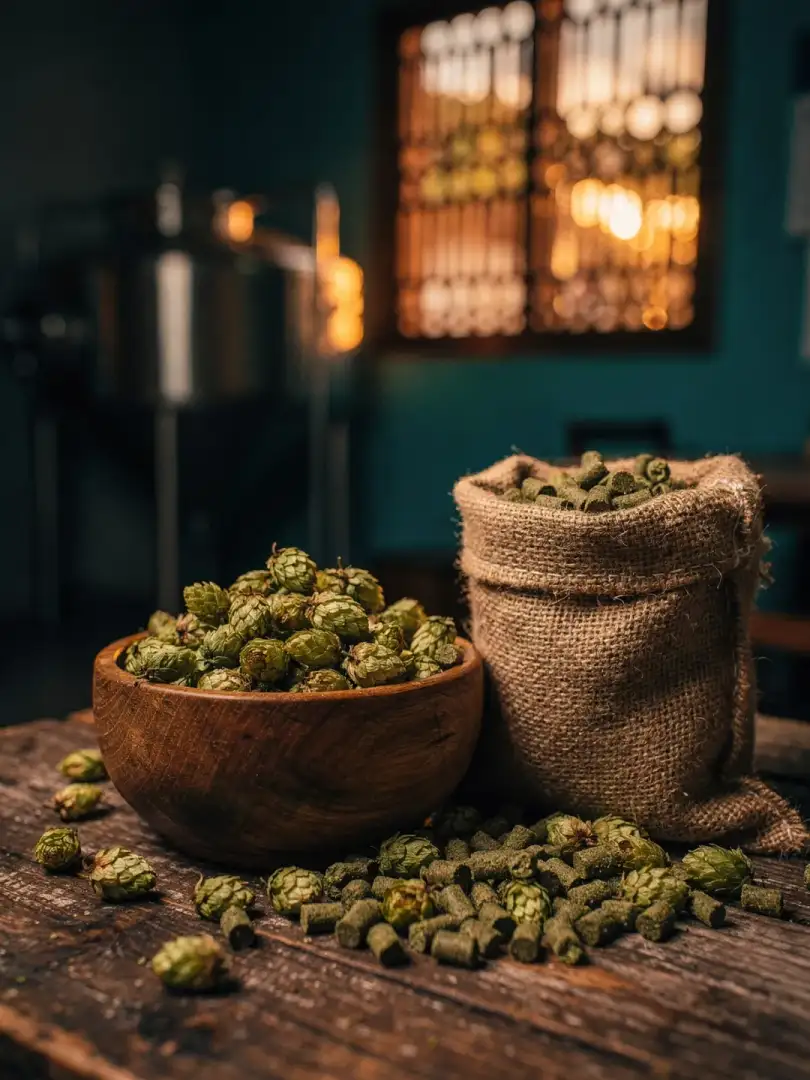
The hops for Manila's beer are therefore imported, usually as whole cones, pellets, or extract. Which varieties the brewery uses isn't disclosed publicly. Hops contribute two things to beer: bitterness, which balances the malt's sweetness, and aroma, which can range from herbal to citrus.
Bitterness is measured in IBU, or International Bitterness Units: German Pils sits at 22 to 40 according to style guidelines, while an international pale lager comes in much lower, at just 18 to 25. That explains why Pale Pilsen tastes so mild — it's meant to refresh in the heat, not challenge the palate with bitterness.
Anyone drinking a beer straight from an ice-cold fridge will taste less bitterness anyway. Cold dulls aromas and sweetness, which is why brewers in warm countries tend toward restrained hopping. A heavily hopped beer served at 3°C (37°F) would mostly taste harsh and hollow.
With Red Horse, the brand's stronger beer, the sweetness of the wort comes through more than the hops. The brewers work with a higher original gravity there — more dissolved sugar before fermentation — leaving the hops as more of a background note. As a result, the beer tastes more of malt and warmth than of herbs.