Barley from Overseas
Malt & Grain
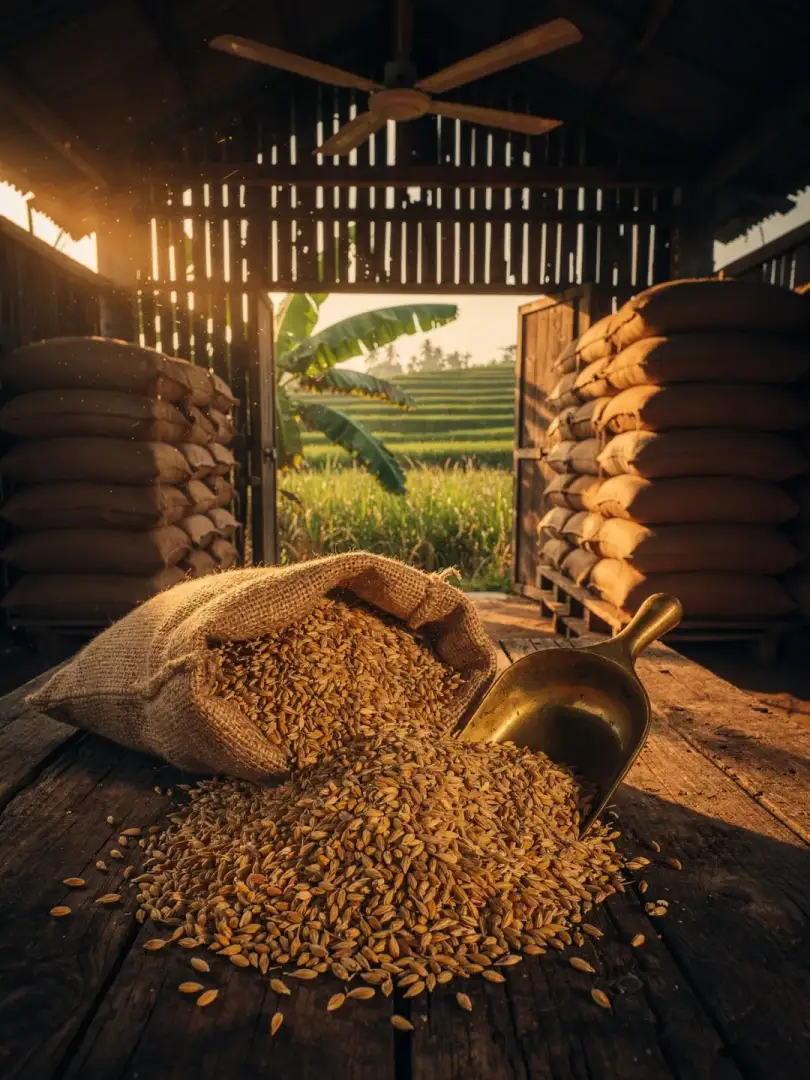
Barley doesn't grow in the Philippines — the climate is too hot and humid for it. The malt for Manila's beer is therefore imported. Malt is grain that has been briefly germinated and then dried, so its starch can later convert into fermentable sugar.
What the Philippines does have in abundance is rice and sugarcane, especially on the island of Negros. Many lager brewers in warm countries replace part of the malt with such adjuncts — rice or corn, for instance — to make the beer lighter and paler. Breweries rarely disclose exactly how much of this a given brand uses.
For Pale Pilsen and beers of its kind, pale malt is enough. Its color sits within the style range for international pale lager, at 4 to 12 EBC — a unit for measuring beer color, where a higher number means a darker glass. The result is a golden-yellow beer with gentle sweetness and no roasted notes.
Dark malt comes into play with another beer from the brand. Cerveza Negra is San Miguel's dark lager, named after the Spanish word for "black." Roasted malts give it color and a light coffee note, though it's drunk far less often — and in much smaller quantities — than Pale Pilsen.
Manila has no malting tradition of its own, the way Bamberg or Bohemia do. Brewers buy in malt, test it for moisture and protein content, and store it airtight before sending it to the mill. The mill cracks the grain open without crushing the husks, which later serve as a filter bed during lautering.